



Recognising the burgeoning interest in underwriting exposures related to the data center build-out, global data analytics and technology provider Verisk has announced the launch of a dedicated exposure database for these large risks in the United States.
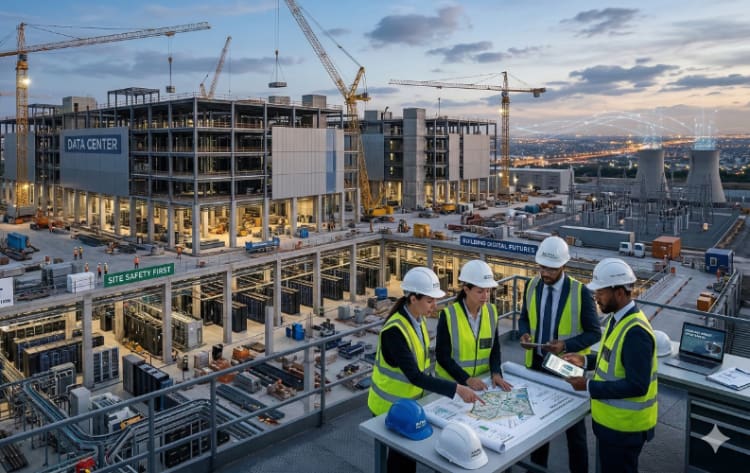 The data center underwriting opportunity is seen as one of the biggest net-new premium sources for the global insurance, reinsurance and insurance-linked securities (ILS) industries.
As the artificial intelligence (AI) capex wave continues to grow, the insurance limits required to cover data centers and digital infrastructure construction and operation said to be outstripping the capacity of the industry.
More granular information about the risks and exposures involved could be a key driver for establishing a better-functioning risk capital pipeline, from the capital markets, through reinsurance and back to support the primary underwriters.
More granular data can also assist with segmenting out different classes and types of risk from within these high-value campuses, which could be critical to enable ILS capital to flow in to support the capacity needs of this opportunity.
Verisk explained that its new U.S. Data Center Exposure Database is “designed to help insurers, reinsurers and brokers better understand and manage one of the fastest-growing concentrations of risk.”
The opportunity is meaningful, given industry reports suggest global data center insurance premiums could more than double from around $10 billion in 2026 to as much as $23 billion by 2030.
The scale of the risk limits required has stretched insurance capacity and the reinsurance market is not yet providing as much support as is needed to ensure the capacity becomes available.
Hence, there’s been a wave of interest in insurance-linked securities market circles, as the capital markets are seen as a source for covering peak catastrophe and severe weather exposures associated with these data center campuses.
Verisk’s new exposure database provides building-level geocoding, facility footprints, physical characteristics and operational attributes for over 2,500 facilities across the United States.
It can be utilised to support a range of use cases and workflows within Verisk’s Synergy Studio and Touchstone products.
“AI is often discussed as a digital transformation story, but it is increasingly a physical infrastructure story,” explained Rob Newbold, president of Verisk Catastrophe and Risk Solutions. “The facilities powering that growth represent billions of dollars in concentrated assets, and that has implications not only for insurers but also for reinsurers, investors and capital markets participants looking to understand and manage emerging sources of potential risk.”
“Data centers have quietly become one of the largest and fastest-growing concentrations of insured value in the modern economy,” added Jay Guin, executive vice president and chief research officer, Verisk Catastrophe and Risk Solutions. “Organizations are investing billions of dollars to support AI-driven growth, but many insurers are increasingly focused on understanding where these assets are located and how risk accumulates across regions and portfolios. If you can’t identify the exposure, you can’t effectively measure or manage it. This data set is designed to provide additional information to support those efforts.”
Verisk notes that information can often be incomplete or lacking when insurers analyse data center risks, so its new exposure database hopes to fill some of those gaps.
The new U.S. Data Center Exposure Database features location, structural and operational information for facilities across the country, including: rooftop-level geocoding; building footprint data; construction type; floor area; capacity; and operational redundancy characteristics.
To support underwriting, exposure management, catastrophe analytics, and portfolio accumulation assessments, it also comes with flat-file records, building footprint shapefiles, and a 90-meter disaggregation grid to support advanced geospatial analytics and catastrophe modeling applications, Verisk explained.
Verisk said it is answering industry demands with this new database.
“Data centers are ultimately physical facilities with real-world exposure to hurricanes, flooding, severe convective storms, earthquakes and other perils. As AI infrastructure continues expanding across the United States, understanding where those assets are located and how risks aggregate becomes increasingly important to insurers, businesses and communities alike,” Guin concluded.
At our Artemis London 2026 conference earlier this week, a panel session explored the opportunity for the ILS market in data center risks, concluding that it is inevitable that ILS capacity will absorb some of this risk through its usual channels, as data centers are in many ways no different to other high-value infrastructure and engineering single risks.
But the ILS market could also have an opportunity to reimagine the way risk flows and structures respond to different peril exposures within these complex development projects through their ongoing lifespans, something more granular exposure data can support
 View all of our Artemis Live video interviews and subscribe to our podcast.
All of our Artemis Live insurance-linked securities (ILS), catastrophe bonds and reinsurance video content and video interviews can be accessed online.
Our Artemis Live podcast can be subscribed to using the typical podcast services providers, including Apple, Google, Spotify and more.