



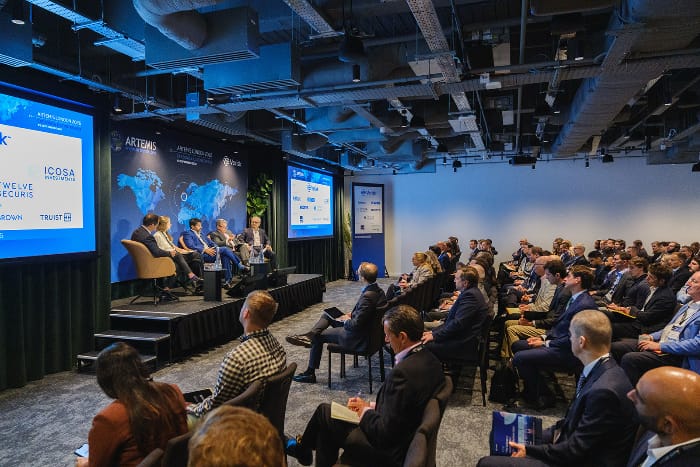
The catastrophe bond and insurance-linked securities market remains well-positioned, even as reinsurance market conditions soften, with speakers at our Artemis London 2026 conference yesterday highlighting the discipline in the market and that this is expected to persist, while growth opportunities are still evident.
 We held our Artemis London 2026 conference on September 1st and had around 220 attendees through the door on the day.
Attendees came from across the marketplace and around the globe, representing ILS specialists, insurance and reinsurance buyers, specialist ILS market service providers, investors and more, with over 120 organisations represented at the conference.
This was our fifth conference in the Artemis London series and a particularly engaging one, as the current state of the market made for very interesting and forward-looking discussions on stage and during the valuable networking sessions with attendees.
Thanks to the participation and partnership of our expert speakers, supportive sponsors and positively engaged attendees, for making Artemis London 2026 such a fantastic event.
Ultimately, the sentiment we took away from the day was that the ILS opportunity persists and can continue to grow and expand, as long as discipline is maintained among market-participants and the needs of both sponsors and investors are kept front-of-mind. The relevance and importance of ILS capacity should not be understated, as it deeply embeds itself across insurance and reinsurance.
We will make video of every session from the conference available over the coming weeks. Once available, all videos will be viewable online and their audio will be available in our podcast too. Watch videos of previous Artemis conferences here.
Here is our initial review and summary of the event.
 Artemis London 2026 began with a locally relevant panel session titled “Unlocking capital at Lloyd’s: Evolving use-cases of the London Bridge ILS platform,” moderated by Ed Saul, SVP, Senior Client Partner, Artex Capital Solutions.
He was joined on stage by panellists: Angus Jordan, Senior Manager London Bridge. Chairman, London Bridge 2 and LB Risk PCCs, Lloyd’s; Lauren Johnson, Head of Funds at Lloyd’s, Acrisure Re Corporate Advisory & Solutions; Deepon Sen Gupta, Head of Capital Partnerships, OAK Global; and Perry Thomas, Chief Executive Officer, Flood Re.
This session explored the evolution and strategic expansion of the London Bridge insurance-linked securities (ILS) platform within the Lloyd’s insurance and reinsurance market.
Speakers discussed why insurance-linked securities technology is gaining traction within the Lloyd’s ecosystem. Subjects touched on included the capital efficiency of Funds at Lloyd’s, noting their attractiveness to institutional investors due to efficiency in accessing business and Lloyd’s historically strong and diversifying returns.
The discussion highlighted recent innovations, including catastrophe bonds issued under London Bridge and the use of Letters of Credit to optimise capital stacks. Looking forward, the panel identified potential growth opportunities for the London Bridge ILS platform in sidecars, excess of loss covers, and more flexible reinsurance structures.
Ultimately, the session emphasised how London Bridge serves as a vital enabler for diversifying capital sources within the Lloyd’s market and how this can support creative underwriting and business expansion, as well as discussing the potential for enhancement of the opportunities available through regulatory collaboration.
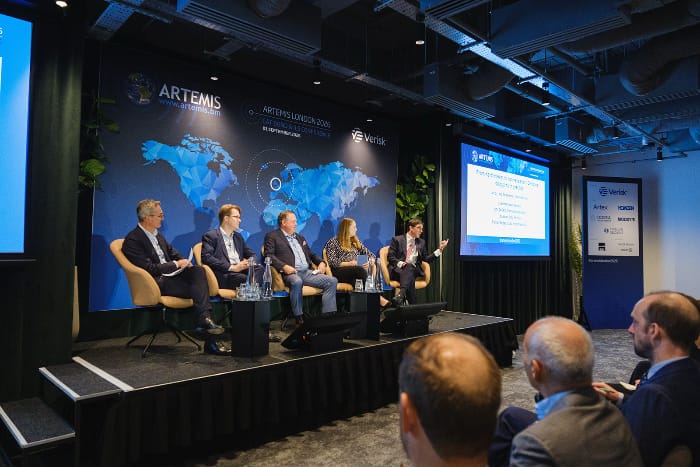 After a short break, the second panel session of the day focused on catastrophe bonds and was titled “From hard market to normalisation: Cat bond discipline in practice.” This session was moderated by Nils Ossenbrink, Head of Distribution and Products, Twelve Securis.
Joining him for the discussion were: Florian Steiger, CEO, Icosa Investments AG; Charlotte Acton, Senior Director, Risk Advisory, Moody’s; John DeCaro, Founding Partner, Elementum Advisors; and Jonathan Gray, Chief Underwriting Officer, Pool Re.
The discussion explored the current status of a growing and evolving catastrophe bond market, focusing on “normalisation” and “discipline”. While market multiples have fallen, experts argued that structural discipline remains firm despite softening prices driven by high capital inflows across the reinsurance sector.
Panellists highlighted that while pricing is a function of supply and demand, true discipline requires rigorous risk assessment and robust modelling, particularly for secondary perils like wildfires or terrorism. In addition, the subject of price discovery was explored, with speakers debating whether there is sufficient transparency in the issuance process regarding size, price and timing when order books are regularly oversubscribed and spreads tighten multiple times.
The discussion emphasised that improved analytical granularity and transparency are essential as investors seek higher returns. Ultimately, successful participation depends on balancing quantitative data with qualitative due diligence to ensure adequate risk-adjusted returns, as well as alignment, in a competitive landscape.
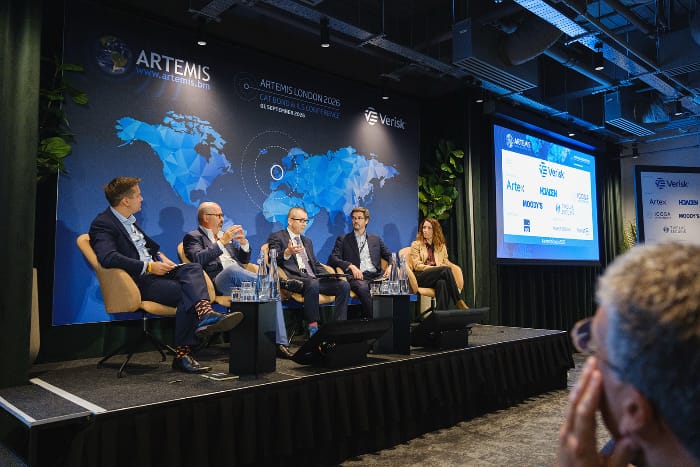 After a longer networking break attendees returned for our third panel of the day, a session focused on achieving true portfolio diversification in ILS within and outside of traditional property catastrophe risk, titled “Beyond peak risk: The expanding spectrum of diversification in ILS.” This panel was moderated by Harry White, Head of PCS, Verisk Insurance Solutions.
Joining him on stage were: Andre Rzym, Partner and Portfolio Manager, Man Group; Connie Tregidga, Managing Director, Global Structured Solutions, Marsh Re; Chris Wilson, Managing Director, ILS, Cedar Trace Advisers Limited; and Rick Pagnani, Managing Partner & CEO, King Ridge Capital Advisors.
Beginning the discussion, the audience heard that novelty alone is not sufficient reason for diversifying within the cat bond and ILS asset class, as speakers said new products must provide marginal contribution and enhance risk-adjusted returns.
The panel discussed a range of strategies for achieving and maintaining diversification within the insurance-linked securities (ILS) market. Key points raised included the definition of boundaries for diversification, balancing novelty against economic value, and the effectiveness of different risk-adjusted return profiles.
Experts explored the evolution of diversification within property, casualty, cyber, and terrorism risks, while highlighting the importance of structural and pricing discipline, as well as robust modelling deal with uncertainty.
Another topic of focus was the unique liquidity and tail-risk protection provided by ILS, as well as how improvements in the existing structures have enabled the asset class to expand. In addition, longer-tailed lines such as casualty were explored, as well as the potential for whole-account deals to be another attractive access point for investors looking to derive reinsurance linked returns.
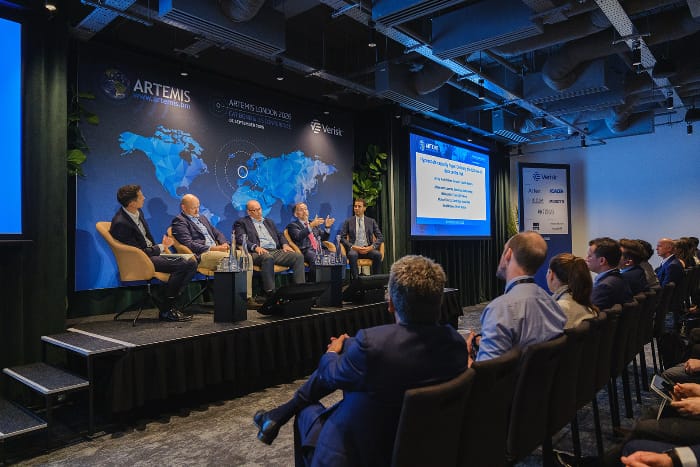 Attendees then enjoyed a long networking lunch with ample time to meet their peers and discuss the morning’s sessions, before the fourth panel of the day which was titled “Hyperscale capacity hype: Defining the ILS role in data centre risk” and moderated by Andy Palmer, Head ILS Structuring EMEA & APAC, Swiss Re Capital Markets.
Joining this discussion were: Niklaus Hilti, Chief Investment Officer, Euler ILS Partners; Mick Moloney, Partner, Global Head of Insurance, Asset Management and Actuarial, Oliver Wyman; Michael Knecht, Managing Director Investment, Cambridge Associates; and Abderrahim Elamrani, Head of Reinsurance, Descartes Underwriting.
As digital infrastructure capex investments fuel an unprecedented boom in data centre development, the scale of the insurable values being developed and planned are stretching the capacity of the traditional marketplace, leading to calls for alternative and ILS capital to get involved.
Our speakers in this session highlighted this capacity gap caused by unprecedented investment scale, extreme capital concentrations, and complex risks like power supply reliability and chip value depreciation.
While traditional insurers struggle with these large limits, ILS can provide essential peak risk capacity, the speakers said, although exact structures and mechanisms for slicing up the risks embedded in these large and valuable campuses remains a topic the industry needs to further develop.
Challenges remain regarding risk transparency, correlation with existing investor portfolios, and the need for standardised structures.
Ultimately, our experts suggested that although investors must navigate uncertainty, the sheer magnitude of the sector makes it an inevitable target for specialised catastrophe risk transfer and parametric solutions, perhaps starting at the reinsurance and retrocession end of the market chain.
It’s seen as a given that ILS capacity will absorb some of this risk through its usual channels, as these are in many ways no different to other high-value infrastructure and engineering single risks. But the market could also have an opportunity to reimagine the way risk flows and structures respond to different peril exposures within these complex development projects through their ongoing lifespans.
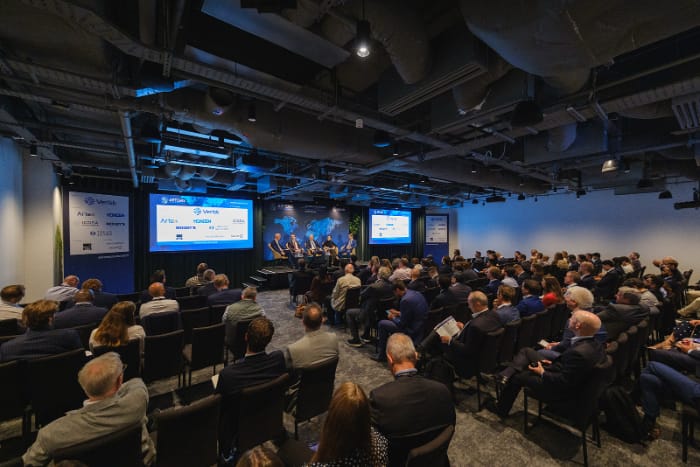 Following our final networking break we returned for our last panel discussion, a session titled “Future-proofing ILS: Creating opportunities through market cycles” which was moderated by Steve Evans, Editor-in-Chief, Artemis.
Joining this discussion were: Philipp Kusche, Chairman HCMA Europe, Global Co-Head ILS, Howden Capital Markets & Advisory; Lorenzo Volpi, Deputy CEO, Managing Partner, Leadenhall Capital Partners LLP; Chantal Berendsen, Partner & Hedge Fund IDD Senior Analyst, Insurance Specialist, Albourne Partners; and Sidney Rostan, Head of ILS, SCOR Investment Partners.
As pricing normalises and capital dynamics evolve across catastrophe bonds and ILS, this panel discussed how proactive leadership and structural innovation can steer the ILS market through shifting reinsurance conditions.
Panellists agreed that while conditions have softened, structural discipline and terms remain stronger than during the 2017-2018 period.
A key takeaway was the importance that the industry continues to enhance transparency to maintain investor trust, while ensuring there are no surprises introduced through more relaxed terms.
Experts highlighted that while capacity and capital levels are increasing, it is critical for ILS managers to be prudent in their capital raising and the timing of that, while also remaining selective in their investment decisions.
In addition, the panel discussed the improved infrastructure of the ILS market and specifically of ILS managers, which has enabled them to both do more with less, in dollar terms, while mitigating collateral trapping risk and using underwriting structures to enhance structural terms and returns for investors, all of which can help the market defend its position and structural gains made even during a perhaps prolonged period of reinsurance softening.
Speakers also echoed some of the earlier sessions thoughts on growth opportunities, agreeing that data centres are an inevitable source of risk given their scale, while highlighting the potential for continued broadening of the ILS market’s product and peril set, as well as the potential for artificial intelligence (AI) to be transformational in the industry’s processes.
The conference was buzzing throughout the day and we thank our speakers for their expert contributions and our attendees for their engagement and interest in the topics discussed.
It’s clear that the ILS market remains very focused on discipline at this time, but always with one eye on the future development of the product set and market infrastructure as well.
As 2027 approaches, this could be a very important few months for the industry, both in demonstrating that discipline can be persistent and in showing it has the capabilities to capture expansion and net-new opportunities for growth.
Thank you again to everyone who attended Artemis London 2026, to our wonderful speakers and supportive sponsors!
We will be back for another London conference next year, around the same time.
Our next conference will be Artemis ILS NYC 2027 in New York City. Our flagship event of the year, ILS NYC will be held on Friday, February 5th 2027 and we expect more than 450 attendees will join us again next year. Tickets will go on sale for the conference in the next few weeks, so please save the date.
For any sponsorship enquiries for Artemis conferences and events please email us at [email protected].
We try to create the kind of conferences that we would want to attend ourselves, mixing insightful content, great speakers, a forward-thinking outlook with quality networking.
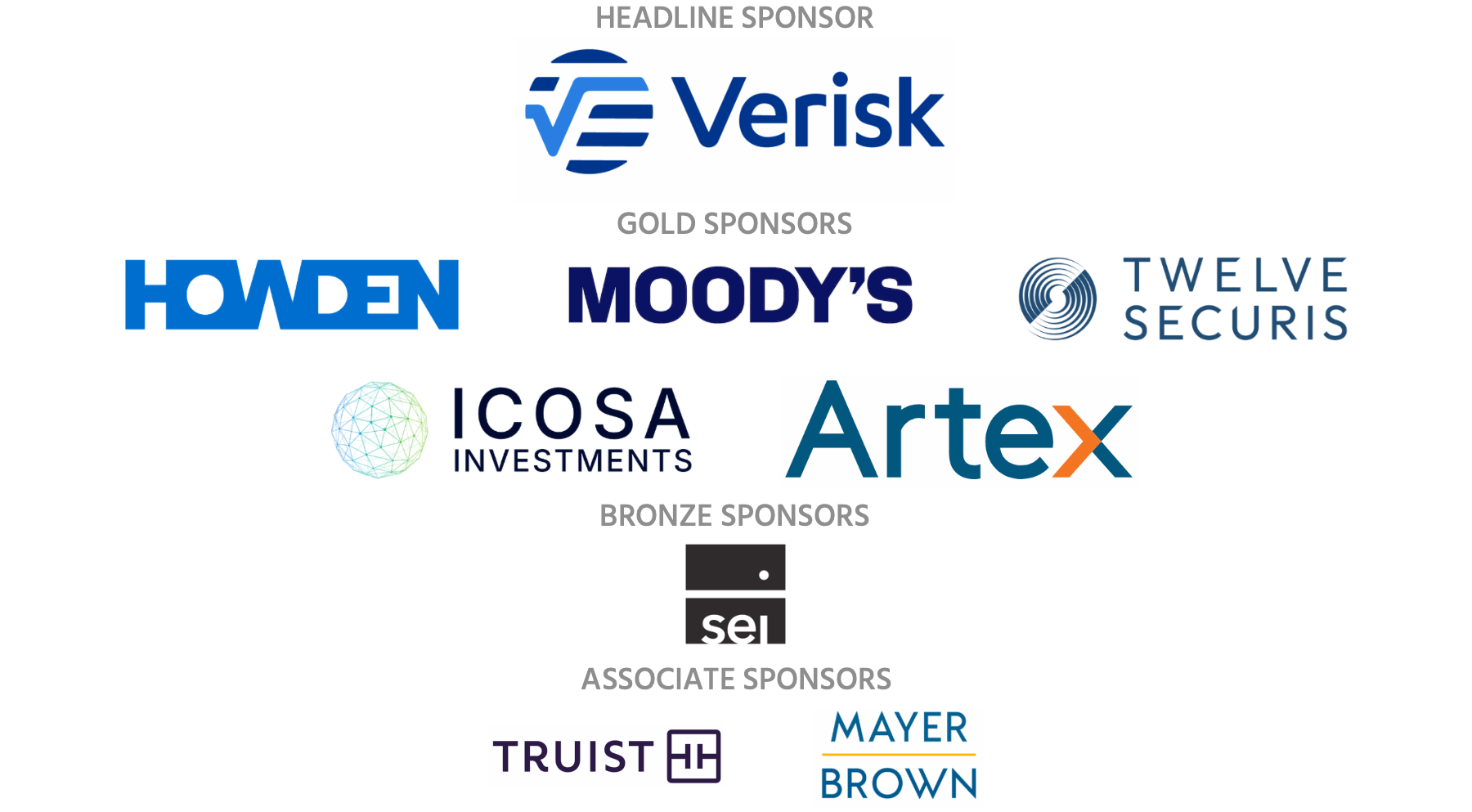
Our Artemis London 2026 conference sponsors can be seen below, we thank them all for their valued support:
For any sponsorship enquiries for Artemis events please email us at [email protected].
 View all of our Artemis Live video interviews and subscribe to our podcast.
All of our Artemis Live insurance-linked securities (ILS), catastrophe bonds and reinsurance video content and video interviews can be accessed online.
Our Artemis Live podcast can be subscribed to using the typical podcast services providers, including Apple, Google, Spotify and more.