



As alternative reinsurance capital, so that deployed through insurance-linked securities (ILS) and related collateralized structures, continues to expand and gain momentum across the reinsurance market, this pace is expected to continue, and according to Laurent Rousseau of broker Guy Carpenter, this will lead to a greater space for financial investors.
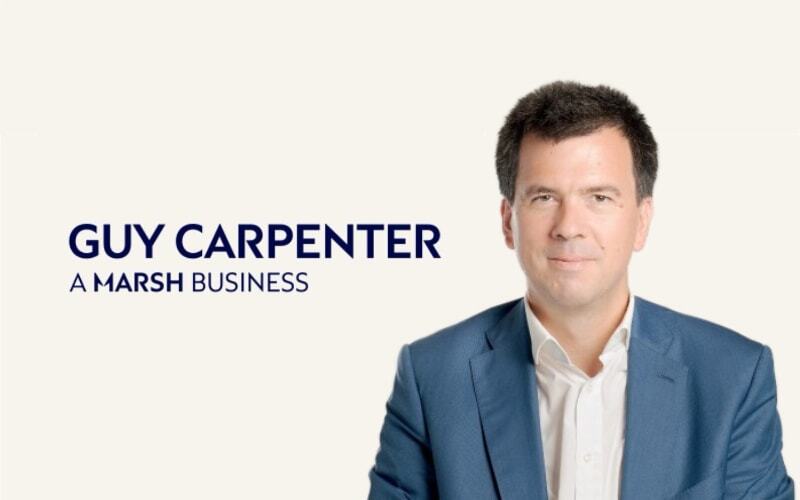 Rousseau, who serves as CEO of Global Capital & Advisory, Europe and IMEA at the broker, made these comments during a recent episode of Mercer’s Critical Thinking podcast, that was hosted by David Morrow, Global Insurance Proposition Leader at Mercer.
To begin with, Rousseau explained how the risk transfer market has evolved since 1992’s Hurricane Andrew, a major event that was transformative towards the creation of the ILS and catastrophe bond markets.
Rousseau highlighted how the event fueled the creation of Bermuda as a hub for traditional capital, and how Bermuda went on to become a hub for traditional reinsurance.
“So you had a number of investors and hedge fund investors putting in traditional capital in a traditional way in Bermuda. And I insist on a traditional way because this is what we call in our recent report the old world’s limits, in a sense that since then financial investors have actually realised that it would be a different way to back insurance risks than by putting in hard capital in an offshore center,” Rousseau explained.
“And so what we have seen, and really taking off in the early 2000s is financial investors looking at natural perils as a source of diversified risks. And so the catastrophe bond market really started taking off in these early-2000 years and really became a key part of the reinsurance industry since. And I would say since the mid-2010s, we have seen the growth of a different sort of market: far less liquid, far less catastrophe exposed, and much closer to insurance risks I’d call sidecars or more ground-up insurance vehicles,” he continued.
Later into the podcast, Morrow acknowledged how there has been heavy interest within the alternative capital space in recent years. Nevertheless, similar to any market, there are inherent limits and tensions, which Rousseau identifies as two distinct types.
The CEO explained that the first type pertains to those that are intrinsic to any insurance or reinsurance business, specifically the capability to model payrolls and accurately price policies.
He emphasised that prices within the property and casualty insurance and reinsurance sectors are declining, however he notes that this does not imply a lack of profitability; rather, it remains profitable despite the decreasing prices.
“I think that these are the traditional ways where you expect to have a well-modeled, well-structured and priced business, and that will never go, and it’s not new in many ways,” the CEO noted.
The other type of difficulty within limitations that Rousseau highlights comes from those arising from having two unique worlds meeting each other.
“What I mean by this is the financial world and insurance world do overlap; they are complementary, but they have different languages. What I mean by this is the claim process in the insurance world is very different than a liquidation in a credit event or payout of a financial instrument. It is more sticky. It is taking more time. It is far less transparent, and it’s not always easy to make sure that financial investors understand the specificities of insurance business and bringing in capital providers that have a different lens, we create as well some kind of complexity and some kind of ambiguity,” he added.
“Very often financial investors are driven by a contract, driven by a price, while in the insurance industry, the relationship can be taken over as well. There are more broader factors coming into the deal making and the price making and so I think as long as the insurance sponsors and financial investors align themselves on the expectations and motivations and the sustainability of their interest, we will have a happy collaboration,” the CEO continued.
Looking ahead towards the next five years, Rousseau expects alternative reinsurance capital to keep expanding. However, he emphasised that further learning will be required in order to maintain that momentum.
“Five years down the line, for me the key question is not so much to predict that capital markets will eat the reinsurance industry for breakfast. That’s not true. There will be a greater space for financial investors in the reinsurance industry,” Rousseau said.
“At the moment, you talked about there being a finite amount of capital in the reinsurance industry, that’s correct. Out of just under $700 billion you have over $120 billion that is coming from financial investors. So this kind of 20% plus share is likely to increase. But I also think that there will be some further learning process and getting to understand each other processes that often comes with some kind of rupture in the market.
“So, what I would really hope for is that we learn from those market events. We learn that the two universes of financial investors, and reinsurance companies get to know and understand each other better. And in the end, I would easily imagine that a third of the reinsurance capital is provided by financial investors, and there is a good balance between the two, and each form of capital playing very different roles, where reinsurers continue to play as leaders. They know how to quote the business, they know how to appreciate risks, and sometimes they’re constrained in the size of the balance sheet.
“And investors would be educated followers, where they know how to pick the best leaders and they know how to follow the best leaders with a full alignment of interests, with sharing the fortune of the reinsurers and behaving as smart followers. And that, for me, is probably where the industry is trending towards,” Rousseau added.
 View all of our Artemis Live video interviews and subscribe to our podcast.
All of our Artemis Live insurance-linked securities (ILS), catastrophe bonds and reinsurance video content and video interviews can be accessed online.
Our Artemis Live podcast can be subscribed to using the typical podcast services providers, including Apple, Google, Spotify and more.