



As the insurance-linked securities (ILS) and catastrophe bond markets continue to embrace artificial intelligence (AI), the technology has the potential to help expand the market into new sectors like data centre risks, according to Ethan Powell, Principal and CIO of Brookmont Capital Management.
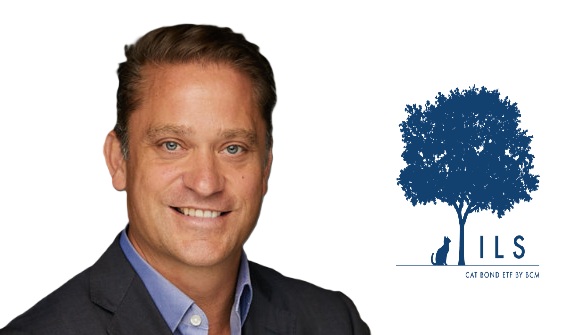 During a recent interview with Artemis, Powell discussed how AI continues to evolve across the ILS market, and how this is ultimately impacting the cat bond market.
To begin, Powell emphasised how AI has advanced so heavily over the last year, and how this is impacting the catastrophe bond market.
“The advancements that we have seen in just the last year for AI have been very impressive. So I think that’s going to continue to grow, and the applications and predictive capabilities will continue to grow. Where we see it really impacting things today is just the speed and accuracy of bringing transparency, not only to the individual cat bond deals themselves, but to portfolios too,” Powell explained to Artemis.
The CIO continued: “Our ability to quickly summarise risks associated with a pending event and potential insured damages is way faster, way more accurate than it has been, and we love that. Because that provides us and our investors with transparency, which means we can have much more contemporaneous communication on potential performance implications of pending perils, and that to me is where today we’re getting the most benefit as a portfolio management team.
“And the sponsors themselves are better able to more quickly assimilate data and more accurately structure deals and have better attachment points with better pricing, which means they’re able to support those deal terms and deal structures better with more contemporaneous data.”
A key area that AI is being implemented across the industry is through catastrophe models, in which Powell believes is ultimately helping to improve deal structures and terms across the cat bond market.
“Investors are being compensated more fairly for the risks being assumed, and for cat bonds that are unique, you have all of these different economic explanatory factors, like trigger points attachment points and exhaustive points,” Powell noted.
“So, our ability to quickly evaluate the risk return profile of all of those different deal term structures, and then effectively communicate that to our investors I think very much helps the investor community,” he added.
While AI continues to bring further advancements into cat models, there is still some room for improvement, specifically around its predictive ability on true trail risk and event risk, according to Powell.
“I think right now the predictive ability of AI with tail risk, in particular is very good, and it’s improving, but I think there’s still some work to be done on predictive ability, on true tail risk and event risk. Don’t get me wrong, the technology is still great, especially regarding insured loss analysis, and there’s so many great things that it provides us to evaluate. But the technology still has more for improvement, especially regarding its predictability. But I believe it will get there,” Powell explained.
As AI continues to bring more advancements within modelling complex risks, the technology also has the potential for the 144A cat bond market to expand beyond standard natural disasters, such as enabling more capacity for expanding areas such as data centre risks, which in recent years has begun to gain heavy attention across the reinsurance and ILS space.
“Data centres are an interesting one. I think that AI’s ability to aggregate, consume and appropriately analyse new and different risks will help towards product development and the expansion of the cat bond and reinsurance markets. If you think about the data we have on hurricanes, right, it goes back decades across centuries,” Powell explained.
He continued: “So, the data we have on data centre risks, particularly in areas like Louisiana, where Meta is building a huge data center, there’s not a lot of information on data centers in Louisiana historically, and they’re impacted by a lot of a lot of different factors.
“Because of this, I think AI will help us to more appropriately evaluate those new perils and the new risks associated with those perils, which ultimately, I think will help product development and speed the market up on some more interesting and creative cat bond on perils.”
To conclude, we also asked Powell to share how further advancement in AI could potentially impact the Brookmont Catastrophic Bond ETF in the near future.
“I think it’ll continue to improve our product and the service we’re able to provide to our investors. I also think that it will allow us to get more creative in product development and be able to maybe have a separate cat bond data center fund one day.
“As a company, we’ve certainly talked about doing more within life excess morbidity, and that’s becoming such a growing part of the cat bond market, so I think it’ll help with our existing fund and communication, and just portfolio management. However, I think longer term AI will help us with product development and to be able to offer new and interesting exposures via an ETF or other wrappers,” the CIO concluded.
Read all of our interviews with ILS market and reinsurance sector professionals here.
 View all of our Artemis Live video interviews and subscribe to our podcast.
All of our Artemis Live insurance-linked securities (ILS), catastrophe bonds and reinsurance video content and video interviews can be accessed online.
Our Artemis Live podcast can be subscribed to using the typical podcast services providers, including Apple, Google, Spotify and more.