



While the broader catastrophe bond market often adopts a wait-and-see posture until the Atlantic hurricane season passes, the current 2026 landscape suggests that the most compelling value may be found during this window of peak uncertainty, according to Ethan Powell, Principal & Chief Investment Officer of Brookmont Capital Management, LLC.
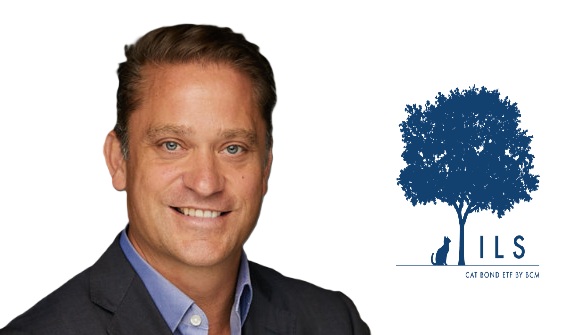 Despite forecasts from Tropical Storm Risk and CSU pointing toward a manageable season, record sea surface temperatures continue to weigh on investor sentiment. However, as Powell tells Artemis, this disconnect between perceived peril and actual portfolio impact creates a strategic opening for those willing to look past the tactical headlines.
As we’ve previously reported, forecasts currently tracked by Artemis show an average of 12 named tropical storms, 5 hurricanes and 2 major hurricanes for the 2026 Atlantic season.
As the upcoming season is poised to commence in just a few weeks, Powell recently discussed with Artemis the outlook that Brookmont Capital anticipates for the 2026 Atlantic hurricane season, as well as its implications for the cat bond market.
“We work closely with King Ridge Capital, and they have deep expertise in meteorology and climate risk, and they’re all actuaries, so we do rely a fair amount on them. That said, I think the general consensus is that we’re pretty constructive about the year. One point of reference was last year, which was really bizarre, right? We saw three category five hurricanes, the second most only to 2005, but no named hurricanes hit or made landfall in the United State,” Powell told Artemis.
“There was still $108 billion recorded in global insured losses, primarily through severe convective storms. It was an odd situation where, on the surface, it looked like a particularly bad hurricane year, but overall it really wasn’t,” he continued.
“We’re cautiously optimistic for this year’s season. We do have higher than normal sea temperatures in the Atlantic and the Gulf of Mexico, but the El Niño effect should help temper hurricane activity through increased wind shear. Hopefully, that will result in an average-to-below-average hurricane season, and only time will tell where those storms might hit. I think that’s a big part of it. I think what we saw last year was that the severity of the year is equally important as where the storms go and what insured property exists in those high-peril areas. So, that’s our view. We’re cautiously optimistic, but taking a wait-and-see approach.”
Typically, we see across the market that investors tend to wait until after the hurricane season to buy cat bonds.
However, as Powell stresses, the current pre-season window, with its higher uncertainty and potential for higher yields is actually a strategic time to allocate.
“One of the key points we always like to highlight is that the cat bond market is a strategic allocation and not a tactical trading vehicle. We saw last year that the spreads began to tighten towards the end of the year, based on having a very easy cat bond impairment year,” the CIO said.
“I think now is a great time to allocate to the market. I know that King Ridge is seeing a lot of great new issuance in the primary market that they’re picking up on, and secondary trading activity is attractive as well.”
Moving forward, we also asked Powell to share how the Brookmont Catastrophic Bond ETF uses international perils like European windstorms or Japanese typhoons to balance the portfolio when US hurricane forecasts look particularly aggressive.
“The investment program within the portfolio is really designed to mirror the issued in an outstanding cat bond market as it relates to natural perils. One of the things we really like about this asset class is the balance of risk and the diversification, both between the cat bond asset class and other financial assets that are highly correlated within themselves but not with the cat bond market,” Powell stated.
“When you look within the cat bond market itself, if you have an appropriately diversified portfolio based on geography, peril, trigger type, sponsor, and attachment point. You can diversify a portfolio to insulate yourself from some of these larger risks, particularly wind risks, within the southeastern United States. That’s how we use our Chilean earthquake, our Japanese typhoon, and earthquake. We have India and China risks, as well as some European risks.
“A hurricane in Florida has very little to do with a Chilean earthquake, unlike in traditional financial markets, where you saw this year AI advancement impairing prospects for the software as a service market that significantly impaired the private credit market as they were overexposed to those SaaS models, and there was this contagion effect because of that one advancement in AI, and you just don’t see that in the cat bond market nearly as much.”
Given the rise in AI, we asked Powell to share whether he believes this technology is helping investors better understand hurricane risks, and how this ultimately impacts the cat bond market.
“I think you have to juxtapose the advances in AI modeling with increased climate volatility more broadly. There is some level of increased uncertainty, but I do think the AI models are advancing more quickly than climate volatility for the first time in a while, which is helping provide more accurate risk assessments and pricing for cat bonds,” the CIO said.
“I think anytime you can bring additional transparency and clarity to a market, it provides benefits to the investors. Transparency really helps to make a more efficient, oftentimes more liquid, more certain market, and I think that’s what AI is helping us do in the catastrophe bond market as well.
“We’re excited to see what AI can do. We use AI to a certain extent, but I think where you’re really going to see the benefits is through the actuarial underwriting process of the individual issues themselves, and then the market having more and more confidence in that process and having better pricing as a result.”
To end, Powell shared with Artemis what areas that he believes the cat bond market needs to draw its attention towards in the next few years.
“In the long-term, I think some of the market needs to focus on some of the innovations as it relates to earthquakes, data centers, and other types of corporate perils that I think are more common in the reinsurance market.
“As these begin to make their way into the 144A market, I think the market needs to shift attention towards that, and to me, that would be really interesting, and something that we look forward to seeing more volume there, so that we either within our existing fund or possibly launching another, can bring that to the market.”
Read all of our interviews with ILS market and reinsurance sector professionals here.
 View all of our Artemis Live video interviews and subscribe to our podcast.
All of our Artemis Live insurance-linked securities (ILS), catastrophe bonds and reinsurance video content and video interviews can be accessed online.
Our Artemis Live podcast can be subscribed to using the typical podcast services providers, including Apple, Google, Spotify and more.