



As billions of dollars continue to flow into new infrastructure such as AI data centres, the re/insurance industry will be forced to rethink traditional approaches to risk modeling, according to Arbol’s Sid Jha, who emphasises that data-driven solutions will play a critical role in managing climate volatility and boosting resilience.
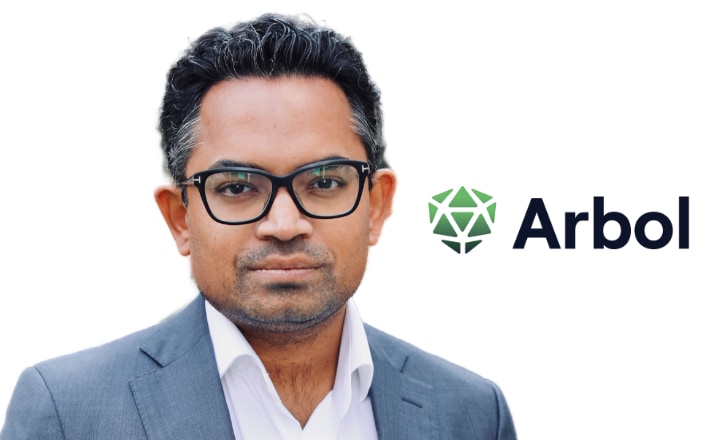 Following the 2026 Monte Carlo Rendez-vous event, Artemis spoke to Jha, who serves as CEO at Arbol, the technology-led underwriter of parametric risk transfer, climate, and weather re/insurance business, who outlined how the rapidly evolving risk landscape is putting increased pressure on the re/insurance sector.
“The conversations coming out of Monte Carlo reinforce just how quickly the risk landscape is evolving, putting greater pressure on the insurance and reinsurance industry to keep pace,” Jha told Artemis.
Jha highlighted the enormous investment opportunities for new infrastructure, particularly through data centres, which are currently undergoing a massive global build-out
“The rapid buildout represents a significant growth opportunity for insurers, but the scale and complexity of these facilities also introduce new risks that the industry is still learning to adapt to,” Jha cautioned.
He continued: “At the same time, physical climate risks are becoming more volatile, adding another layer of complexity to how insurers assess and price their rapidly growing exposures.
“As billions of dollars continue to flow into new infrastructure such as data centers, the industry will be forced to rethink traditional approaches to risk modeling. Data-driven solutions will be critical to managing growing climate volatility and strengthening resilience.”
Jha also outlined that AI remains a key topic within the industry, as more insurers continue to deploy the technology to help drive greater efficiency.
“AI remains top of mind, and we’re seeing the conversation move from how insurers are deploying AI to where it is making a real difference, from improving underwriting performance to driving greater efficiency across the insurance lifecycle,” Jha said.
The CEO then highlighted some of the key themes that stood out from conversations that Arbol had throughout Monte Carlo this year, one of which being how parametric reinsurance continues to gain significant momentum.
Parametric reinsurance has seen significant growth in recent years due to a combination of rising climate volatility and secondary peril losses.
Jha said: “Parametric reinsurance continues to remain a focus as the industry explores new ways to structure and transfer risk in response to growing climate volatility.”
He continued: “The softening market was another major topic of discussion, particularly around the need to maintain underwriting discipline as increased capacity and competition put pressure on pricing,”
In addition, as new risk types evolve, Jha acknowledged how this could open new avenues for alternative capital, with more market participants turning to insurance-linked securities (ILS) to manage exposures.
“We’re also seeing new forms of capital, including ILS, begin to move beyond their traditional focus on property and catastrophe risk into new types of risk such as longer-term liability. This shift could open new areas of the market to alternative capital and expand the options available to insurers and reinsurers for transferring risk,” Jha added.
Read all of our interviews with ILS market and reinsurance sector professionals here.
 View all of our Artemis Live video interviews and subscribe to our podcast.
All of our Artemis Live insurance-linked securities (ILS), catastrophe bonds and reinsurance video content and video interviews can be accessed online.
Our Artemis Live podcast can be subscribed to using the typical podcast services providers, including Apple, Google, Spotify and more.