



Further expansion in the ILS market doesn’t necessarily require venturing beyond property catastrophe risk, according to LGT ILS Partners’ Hilary Paul, who recently highlighted to Artemis, that because traditional reinsurers still hold the vast majority of global catastrophe exposure, directing capital market capacity toward extreme tail risks can complement traditional balance sheets without adding counterparty credit risk.
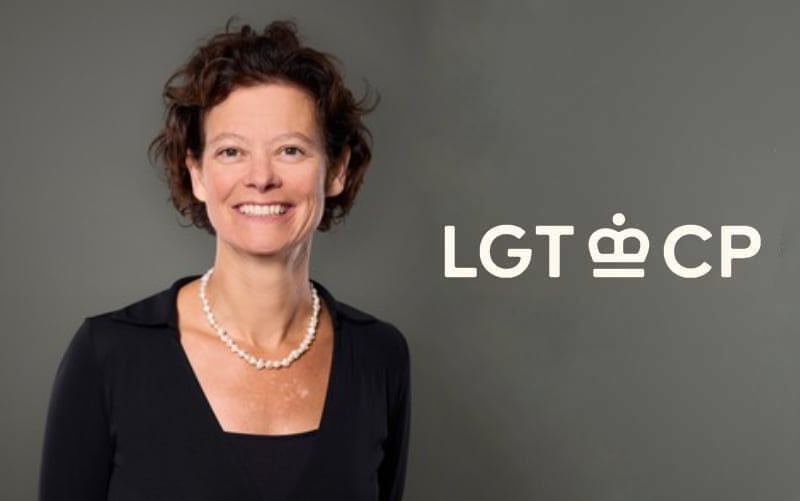 Speaking to Artemis in a recent interview, Paul, who serves as Partner/Portfolio Manager at specialist insurance-linked securities investment manager LGT ILS Partners, discussed the market’s rapid growth in recent years, as well which areas of ILS she believes offer the largest untapped opportunity for capital deployment.
Whilst the ILS market has consistently managed to deliver strong growth throughout recent years, a number of challenges still hinder across the industry, however Paul indicates that attracting capital is not one of them, but rather, finding opportunities to absorb it.
“Contrary to popular belief, the challenge is not attracting capital. Investor interest in insurance risk has never been stronger. The real question is thus whether the industry can find attractive and scalable risk opportunities to absorb this additional capital, while maintaining adequate returns for all investors,” Paul told Artemis.
“Catastrophe bonds and private reinsurance transactions have developed significantly, but the majority of the market still revolves around a relatively narrow set of peak catastrophe risks and persists to focus predominantly on US hurricane and earthquake. If capital continues to grow faster than the investable universe, pricing discipline will inevitably come under pressure,” Paul continued.
“The biggest threat to ILS is neither climate change nor a major hurricane. It is that in ten years from now we may still be talking about the same US hurricane risk pool while trying to deploy twice as much capital.”
Whilst this suggests that the ILS market is potentially at risk of becoming a victim of its own success, Paul importantly points towards the reinsurance market, and how it has previously gone through numerous cycles where excess capital has to led to lower premium rates and increased competition for allocations.
“This is not necessarily a problem in itself as current risk-adjusted returns are still at an attractive level, but the market must be careful not to sacrifice underwriting standards for asset growth,” Paul noted.
“ILS managers are rewarded by managing more assets, via the management fee, yet the ultimate event risk is borne by the capital providers. In our view, long-term success depends on maintaining a healthy balance between investor demand and risk-adjusted returns.”
She continued: “At LGT ILS, we intend to remain selective when the market becomes crowded; this is linked to the fact that our base capital is the proprietary money of the owner and senior staff members of the firm. We have no interest in diluting our returns for the benefit of a higher management fee but will always work towards active cycle management where we focus on generating the optimal profit for the assumed risk.”
As investor demand for ILS continues to rise, there are a number of areas within the market that can offer large, untapped opportunities for capital deployment. However, somewhat contrary to what other voices within the industry are saying, Paul states that LGT ILS Partners doesn’t necessarily believe that ILS needs to expand into cyber, casualty or other long-duration risks.
“Those risks are often better managed on the balance sheets of insurers and reinsurers, where the going-concern of capital, reserving capabilities and long-term client relationships provide a natural home,” Paul said to Artemis.
“In our view, the real opportunity lies within catastrophe risk itself. Today, still only a relatively small portion of global catastrophe exposure is transferred to capital market investors, while the vast majority remains with the traditional reinsurance market. Rather than expanding into new risk classes, the industry should focus on increasing the share of catastrophe risk financed through capital market structures, particularly in the extreme tail,” says Paul.
“ILS capacity offers a high degree of certainty exactly when it is needed most and can complement traditional reinsurance capacity. Over time, we would expect regulators to place greater value on such capitalized tail-risk protection, reflecting the reduced counterparty credit exposure compared to traditional reinsurance. If that happens, the growth potential for ILS remains substantial without ever moving beyond its core competence,” she continued.
Concerning the significant role that the private reinsurance transaction market plays in this evolution, Paul emphasizes that access to risk is likely to emerge as the most vital factor, as private reinsurance placements continue to be a fundamental aspect of the future growth of the ILS market.
Paul also pointed out the efficiency of LGT’s reinsurance carrier, Lumen Re, which operates as a fully regulated reinsurer capable of fronting and servicing LGT Capital Partners’ range of ILS funds.
“One advantage of our platform is that we combine asset management capabilities with our own, A”-rated reinsurance carrier, Lumen Re. This allows for transacting in a way that is familiar and efficient for cedents, while still ultimately connecting insurance risk with institutional investors. A rated balance sheet can facilitate risk sourcing, broaden access to opportunities and provide greater flexibility in structuring solutions. It also benefits investors by enhancing portfolio liquidity and enabling different risk-return profiles, including leveraged structures where appropriate,” she explained.
“In our view, the future is not a choice between traditional reinsurance and ILS. Rather, the most effective platforms combine the strengths of both worlds, delivering rated capacity to clients while efficiently channelling risk to capital market investors.”
Looking ahead into the next ten years, we asked Paul to outline what factors she believes will help determine whether insurance-linked securities becomes a major institutional asset class.
“The key to growth is not raising more capital but involving primary insurers more directly. They originate the underlying risk by writing insurance policies and therefore hold the key to the market’s expansion. We believe insurers will increasingly differentiate between risks that are best transferred to traditional reinsurers and those that are ideally suited for capital market investors,” she said.
Concluding: “Reinsurers will continue to play a critical role in the lower attaching and working layers, while ILS capital is particularly well positioned to provide protection for remote, capital-intensive tail risks. Once insurers adopt this more segmented approach to risk and capital management, the growth potential for ILS remains substantial without ever moving beyond catastrophe risk.
Read all of our interviews with ILS market and reinsurance sector professionals here.
 View all of our Artemis Live video interviews and subscribe to our podcast.
All of our Artemis Live insurance-linked securities (ILS), catastrophe bonds and reinsurance video content and video interviews can be accessed online.
Our Artemis Live podcast can be subscribed to using the typical podcast services providers, including Apple, Google, Spotify and more.