


As market volatility continues to drive a rising demand for structured solutions, reinsurers are increasingly forced to handle complex client objectives all at once, and being able to successfully execute these deals requires underwriting, pricing, and capital teams to be well aligned from the very start. In order to tackle this, Northern Re has built its operating model on a single, shared platform that brings these siloed functions together.
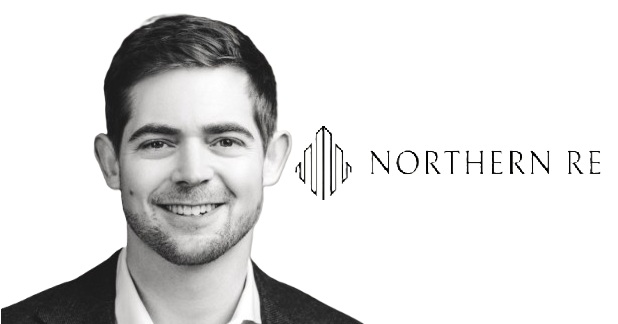 During a recent interview with Artemis, Peter McKelvy Co-Founder of Northern Re, a collateralized reinsurer that provides investors with access to the returns of its long-tail casualty underwriting business, explains the goal is to let multiple teams look at the exact same data, allowing them to iterate together and reach a single conclusion much faster.
Back in April, Northern Re announced that it had selected artificial intelligence and software specialist Palantir Technologies as a core platform to support the continued development of its capital intelligence capabilities.
While Northern Re had been building this platform approach for several years, McKelvy explained why the company had only recently begun to be explicit about using Palantir.
“We didn’t want to talk about technology before it was doing real work. The platform strategy has been in place for a long time, but we felt it was important to be deliberate about naming a partner once we reached a point where it was clearly contributing to how the business operates,” McKelvy said.
“From my perspective, Palantir became the right foundation because it supported the way we already think about decision‑making. We weren’t looking to bolt something on or radically change behavior. We wanted a platform that could support our existing discipline, but let us do it faster and more consistently as we scale.”
Given McKelvy’s product background, we asked the executive what stood out the most to him when working with Palantir.
“Two things stood out very quickly. The first was development velocity. We were able to start building and iterating far faster than you normally expect with this kind of platform. The second was how quickly we could see practical value. This wasn’t a long roadmap full of promises. We are able to build, test and refine in a very direct way, which matters when you’re trying to support live decision‑making rather than create static reporting.”
He continued: “That combination is rare. A lot of platforms either move quickly without depth, or they’re powerful but slow to implement. Palantir strikes a balance that works well for Northern.”
A key topic of discussion within the insurance and reinsurance sector today is artificial intelligence (AI), with many organisations applying the technology into their systems and workflows.
With AI moving at a rapid pace, McKelvy stated that Northern Re embraces the technology, but is cautious about blind automation, and noted that within casualty reinsurance, accuracy, and accountability matter too much to remove human judgement from critical decisions.
“We take a “trust, but verify” approach to AI. These tools should accelerate analysis, drive consistency, and surface insights earlier in the process — but final decisions on underwriting, capital allocation, and risk management stay with our people. That approach aligns with how our investors think about governance. They want to understand not just the outputs, but how decisions are reached.
“Where we’re most enthusiastic is engineering velocity. Northern is growing, and we can’t scale headcount indefinitely, but AI tools have made our developers meaningfully more productive — letting us move fast without a large team,” McKelvy explained.
Additionally, given the rise in structured solutions across the insurance industry, primarily driven by market volatility and higher interest rates, McKelvy explained how Northern Re’s unified approach to technology helps the company execute them well.
“Structured solutions typically address several cedent objectives at once — capital relief, earnings stability, longer-term capacity, portfolio simplification. Executing them well means making trade-offs explicit early, rather than discovering misalignment late in the process,” McKelvy said.
“Our platform makes that possible because underwriting, pricing, and capital management all operate on a shared model. If the capital team adjusts an allocation or tests a different structure, underwriting and pricing see those changes immediately and can respond within the same framework. There’s no translation layer between functions and no separate set of numbers to reconcile. Teams can iterate together, stress the trade-offs, and arrive at a single structure they all stand behind.
“The value isn’t another dashboard. It’s three teams reaching one conclusion — faster, and with far more conviction — because they were working off the same foundation the whole time.”
Where McKelvy referred to bringing underwriting and capital closer together, he went on to explain how this materially improves internal decision speed while embedding strict discipline across the firm.
“It means that underwriting, pricing, finance, and capital modelling are starting from the same data and the same view of performance. Historically, it’s been common for those functions to operate in parallel, which creates friction and, over time, inconsistency,” he said.
He continued: “At Northern Re, we wanted those teams to be able to look at the same picture, run their own analysis, and understand the implications without unnecessary handoffs or re‑work. That sharpens the quality of internal conversations and materially improves decision speed. It also creates discipline. When everyone is looking at the same information, it’s harder for decision‑making to drift as a portfolio grows or becomes more complex.”
The executive concluded by outlining how this internal operating model fundamentally changes the experience for cedents, brokers, and investors, even if they never see the platform itself.
“They experience it through clearer conversations, uniform reporting and more consistent outcomes. When internal teams share a single view of performance, it reduces ambiguity and back‑and‑forth. Over time, that matters more than any individual transaction. Casualty relationships are long‑term. Being able to explain what’s happening, why decisions are being made, and how a portfolio is developing builds trust and keeps everyone aligned as conditions shift,” McKelvy told Artemis.
Concluding: “It also means we can design the structure using one system and one set of data, with underwriting, pricing and capital considerations all being assessed together rather than in separate steps. That matters to investors, but it matters just as much to the insurance company, because it helps us work through their objectives more seamlessly and has a real impact on both transaction speed and overall efficiency.”
Read all of our interviews with ILS market and reinsurance sector professionals here.
 View all of our Artemis Live video interviews and subscribe to our podcast.
All of our Artemis Live insurance-linked securities (ILS), catastrophe bonds and reinsurance video content and video interviews can be accessed online.
Our Artemis Live podcast can be subscribed to using the typical podcast services providers, including Apple, Google, Spotify and more.