



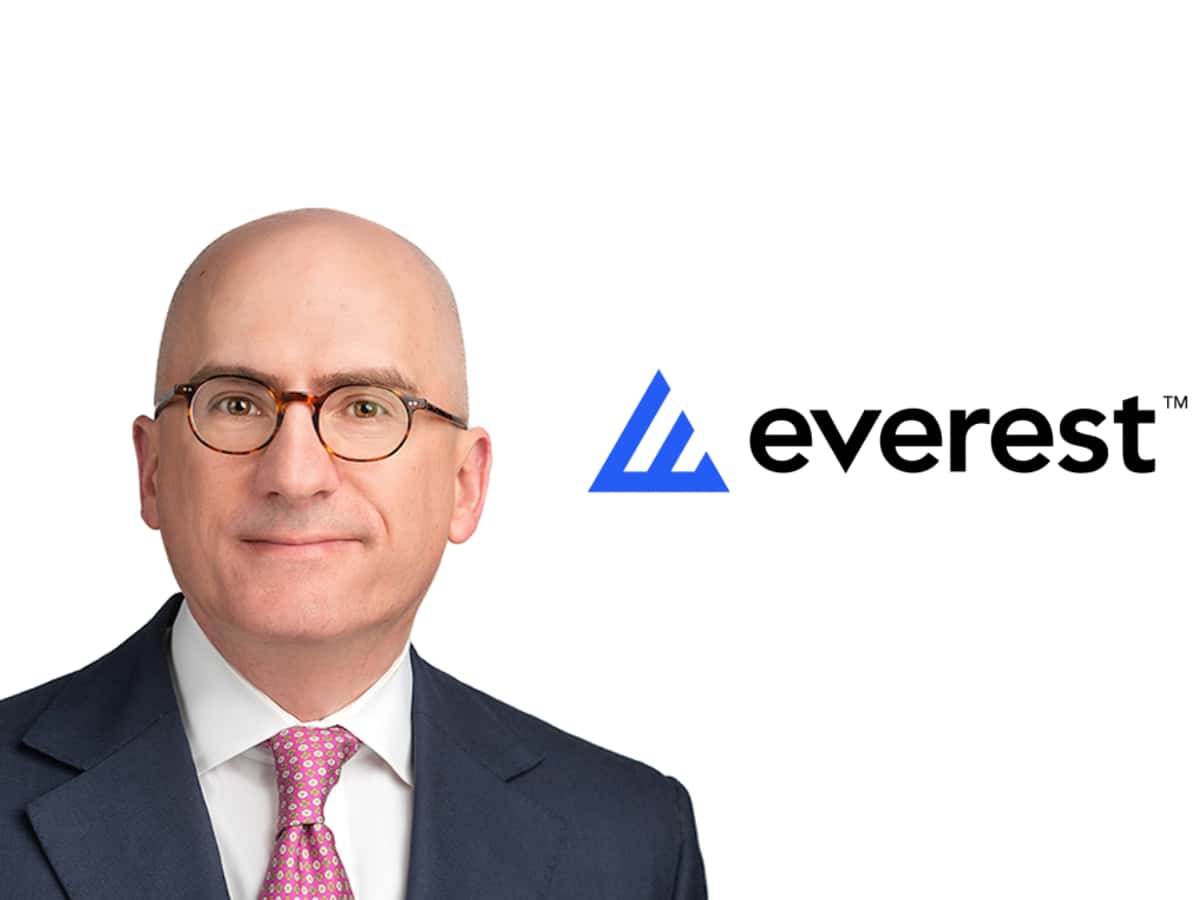
Despite a surge in third-party capital assets under management within its Mt. Logan Capital Management unit, driven largely by the launch of the Annapurna Re casualty reinsurance sidecar, Jim Williamson, President and CEO of Everest Group has outlined that the company doesn’t change its underwriting logic based on the availability of third-party capital.
 We reported this morning that Everest’s third-party capital management platform Mt. Logan Capital Management, Ltd. (MLCM), had expanded its assets under management meaningfully over recent months, reaching $3.4 billion in AUM.
Everest noted that this was heavily driven by the launch of the company’s casualty reinsurance sidecar Annapurna Re Ltd., the largest casualty reinsurance sidecar that’s been launched in the market to date.
Speaking during Everest’s Q2 2026 earnings call today, Jim Williamson, President and CEO, highlighted to analysts how the sidecar helped drive this sharp AUM increase.
“Our third-party capital platform Mt. Logan Capital Management, has approximately $3.4 billion of AUM as of July 1st, up 89% from the beginning of 2025. A major contributor to this growth is the launch of our casualty and specialty reinsurance sidecar Annapurna Re. Annapurna provides Everest with an additional lever to facilitate opportunistic growth, generate fee income, and enhance capital flexibility. This is just another example of the work we are doing to optimise our balance sheet and, at the same time, enhance ROE potential over time,” the CEO explained.
During the call, Elias Habayeb, Everest Group EVP and Group CFO emphasised how Annapurna Re provides the firm with additional portfolio management and financial optionality.
“We expect to see roughly $200 million of premium a quarter over the next three years to Annapurna. We also expect the transaction to be modestly accretive to overall underwriting income and ROE over time, while resulting in lower net investment income,” Habayeb said.
Providing further colour, Williamson said, “Obviously these processes of assembling these sidecars are a negotiation. So it’s really about aligning the appetite of Everest to cede business and the appetite of our capital partners to provide the capacity. Like the rest of what we do in Mt. Logan now, a key theme of our strategies around third-party capital management is alignment of interests.
“Meaning we’re not cherry picking deals to go into the into sidecar. These are quota share structures that take a predefined sliver of everything we write. So our experience is the same experience as our capital providers will receive, and vice versa and we think that’s the most sustainable and aligned way to build these structures.”
Later in the call, an analyst inquired about how the $200 million in premium that Everest intends to cede for Annapurna Re might result in the market anticipating a further reduction in casualty reinsurance on a net basis in the future.
“This is a crucial statement that I want to make sure we’re all aligned around. We start with gross underwriting, and so we’re not going to put business on the books unless we’re confident that we understand it, we’ve underwritten it, we can predict its performance over time, and we feel good about it. And so that’s where it begins and certainly over time, you’ve seen us withdraw from a number of casualty deals and a fair bit of business over a billion dollars in the last few quarters as result of that gross underwriting discipline,” Williamson noted.
He continued: “We’ve now agreed to cede a portion of that business to this vehicle on a quarter-year basis, as I mentioned. And so what does that mean for our net? Well, I would mean immediate term. It means our net retention of casualty will go down. We’re not going to stretch to go find more gross as a result of this transaction. And at the same, and then what I would also add, obviously, it helps us to move the mix and helps to provide some capital flexibility. So there are a lot of benefits to us through that transaction.
“But we don’t change our underwriting logic based on the availability of third-party capital. It’s just not how we how we run the company.”
The CEO also explained how Everest’s hedging strategy has evolved over the years, specifically highlighting how the company’s third-party capital strategy via Mt. Logan gives Everest Group a tremendous amount of support on a go-forward basis for its reinsurance business.
On Mt. Logan he said, “That’s our main method of transferring risk to third parties,” while beyond the third-party capital manager, “We also opportunistically purchase retro, but we do that very sparingly usually in niche areas like aviation, cyber, those are two areas before we’ve purchased some retro. And then, in terms of the back book, I think we’re very open to strategies like what we did last year with the ADC that can enhance our capital position and help us to manage risk,” Williamson said.
“And we look at those things across both businesses on an ongoing basis. If something becomes attractive, you would certainly see us willing to engage in such transactions, and there are some things that happen from time to time. I think our focus there is really on the legacy business and how we accelerate the realisation of capital from that portfolio, that would be the area of most focus for us.”
Discussion also shifted to the mid-year renewals as well as the forthcoming January renewals, during which Williamson acknowledged that the influx of third-party capital is on the rise.
“It’s always important to keep in mind that if you zoom out and you look at the total capitalisation in the industry and the part that’s played by third-party capital is still relatively within range of where it’s been over the last few years. Yes, it’s increasing, but really, on the margins, and so that would be one point.
“I think a lot of the experience we’re having right now in terms of price trajectory is just the fact that people have made a fair bit of money in a variety of markets in reinsurance over the last few years. Underwriters have done well, and they’re looking to put that capital they’ve created through that process to work and so you’re seeing increased competition,” the CEO explained.
“My hope is that that people have learned from the last time that third-party capital really leaned into reinsurance, and I do think that’s a fair hope to have. We’re seeing lot of increased sophistication from third-party capital providers. Certainly, we work only with partners who fully understand the risks that we’re taking, and as I said earlier, we try to create tremendous alignment with our capital providers in that way.
“So, I guess my view, if I were to summarise it, is yes, it’s going to apply some marginal competitive pressure because supply capital goes up. But I think it’s happening against the backdrop of a fair bit of discipline, and so I don’t expect a major dislocation at this point,” he continued.
 View all of our Artemis Live video interviews and subscribe to our podcast.
All of our Artemis Live insurance-linked securities (ILS), catastrophe bonds and reinsurance video content and video interviews can be accessed online.
Our Artemis Live podcast can be subscribed to using the typical podcast services providers, including Apple, Google, Spotify and more.