


For casualty reinsurers, managing risk effectively requires constant alignment across the entire value chain. Yet, traditional reporting methods and disconnected systems frequently cause reporting delays that can hurt capital efficiency. Given this, Peter McKelvy, Co-Founder of Northern Re, speaks to Artemis to discuss how the company’s platform updates models instantly to eliminate this information lag.
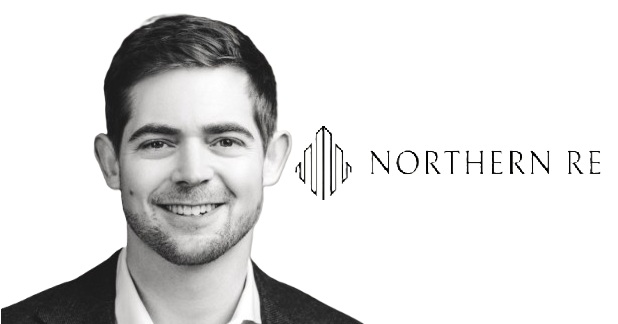 McKelvy outlines why operations have become a central focus for modern investors, the challenge of projecting collateral obligations, and why long-term program management deserves the same discipline as deal inception.
To begin, McKelvy outlined why both operations and data have become a key focus for Northern Re in casualty reinsurance.
“It’s common that insurers and investors have different views on information as it’s reported over many years, so it’s important that as a reinsurer we are consistently remodeling outcomes and having conversations across the value chain. At Northern Re every time we get new reporting on a program it feeds into our platform and the models update instantly.
“A big part of that is the speed at which we can now get to the analytics. For most of our programs, as soon as numbers are reported to us on a monthly basis, that data feeds straight into the platform and the algorithms update immediately. That allows us to see deviations from expected results very quickly, dig in with our partners if something changes and stay much closer to how programs are actually running.”
McKelvy noted that if elements of the operational side are slow or fragmented, then this causes for the economics side to suffer over time. He added that this also shows up in reporting delays, capital inefficiencies, and sometimes in decision‑making that’s based on partial information.
“We felt strongly that getting operations and data right was not a supporting function, but core to running a casualty reinsurance business properly,” McKelvy added.
“Over the past few years, we’ve also seen an evolution in the questions investors and cedents ask. Conversations increasingly start with how information is managed, how it moves through a transaction, and how involved the reinsurance platform remains after placement. That didn’t use to be the case. Now it’s central.”
Moving forward, McKelvy examined why investors are increasingly focused on the operational sides of reinsurance and outlined what he believes they are trying to avoid.
“What we’re seeing now is that investors increasingly expect platforms to demonstrate how they operate, not just describe it. Slow reporting, inconsistent data, or a platform that disengages after execution — any of these can erode the underlying economics of a deal, no matter how well it was structured on day one.
“What investors want is clarity across the entire life of a deal. They want to know the platform will still be engaged years after inception – making sure premium flows correctly, translating insurance-level data into something investors can actually use, and acting as genuine stewards of their capital so it’s deployed as effectively as possible over the life of the deal.”
According to McKelvy, these expectations have pushed Northern Re to invest as much in how the company operates and structures transactions.
“Another piece that is not always obvious is our ability to project collateral obligations forward based on the data coming in, whether that is one month, three months out, two years or further. For a vehicle like ours, that has a direct bearing on returns, so having the modelling depth and technical stack to do that well is very material for investors,” the executive continued.
Previously, McKelvy indicated that underwriting decisions don’t end at inception. Given this, the executive outlines what he thinks of staying close to a transaction once its gone live.
According to McKelvy, staying close to a transaction means having a clear, consistent picture of how a program is developing and being able to act on that information when something changes.
Whilst this sounds simple, in practice it’s difficult if different teams are working off different data or different assumptions, McKelvy explained.
“We think about reinsurance program management as something that deserves the same attention as deal inception. In casualty, it’s entirely possible, and in many cases necessary, to reassess what you’re seeing quarterly or even monthly, to translate what that should mean for capital, terms, or exposure. This has a compounding impact over multiple transactions and treaty years, especially if they involve a variety of different ceding companies.
“The goal isn’t to overreact, but to avoid surprises. That only works if the information is timely, comparable, and accessible to everyone involved, not just sitting in a table or spreadsheet somewhere waiting to be reconciled,” the executive noted.
Looking ahead, McKelvy believes that execution and consistency will be the key factors that will differentiate reinsurance platforms over the next few years.
“At Northern we’re going to keep building but in the market in general there’s no shortage of capital or technical capability. The differentiator is whether a platform can stay disciplined and involved as portfolios scale and complexity increases.
“From our side, we’ll keep investing in integration between underwriting, capital and operations. Once you have a unified structure in place, it also becomes much easier to build internal tooling quickly without having to bring in separate systems or reconcile multiple sources of truth. That gives us a much faster and more cohesive way of improving how the business operates. When we can clearly demonstrate areas or features that improve outcomes for investors and cedents, that’s where we’ll continue investing,” McKelvy concludes.
Read all of our interviews with ILS market and reinsurance sector professionals here.
 View all of our Artemis Live video interviews and subscribe to our podcast.
All of our Artemis Live insurance-linked securities (ILS), catastrophe bonds and reinsurance video content and video interviews can be accessed online.
Our Artemis Live podcast can be subscribed to using the typical podcast services providers, including Apple, Google, Spotify and more.