


While the rising risk of a Super El Niño remains highly uncertain in both geography and magnitude, parametric trigger designs can add a crucial layer of granularity to climate coverage. According to Mark Rueegg, CEO of CelsiusPro Group, this flexibility ultimately allows both insurers and the insured to adapt to volatile climate conditions.
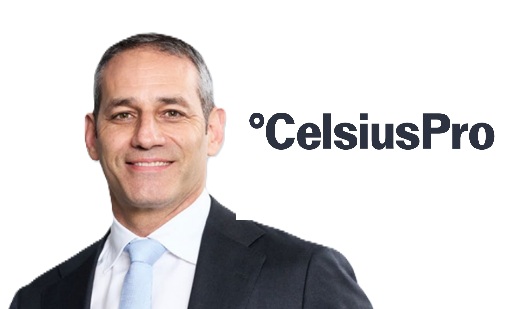 Given that the risk of a Super El Niño continues to rise, Artemis spoke with Rueegg to explore how effective these solutions truly are, and how parametric trigger designs offer effective pricing transparency compared to traditional models.
“Triggers in parametric insurance are always adjusted to local climate conditions in the territory the policy is deployed. This adds a level of granularity to the coverage that allows insured and insurer to adapt to more uncertain conditions, such as those produced by a super El Nino event,” the CEO told Artemis.
He continued: “Parametric insurance by its very nature is transparent in pricing and payout: if the trigger is met, the payout is made. That certainty matters in periods of greater climatic instability. We have historical data for previous El Nino years, and this allows us to set triggers to respond accordingly and reflect the exposures in the pricing.”
With El Niño having caused rolling, seasonal economic damage in the past, Rueegg addressed how the fast payout of a parametric trigger helps corporate risk managers hedge cash flow in real time.
“Parametric insurance is based on the principle of rapid, transparent payouts. It helps clients build cash to overcome liquidity constraints after adverse climate events,” he explained.
“In an insurance tower, a layer of parametric can provide the first layer of insurance, that pays out immediately, without the lengthy loss adjustment process of conventional coverage. This is key: it means anyone from a small business owner to a corporate risk manager can be certain of cash in case of an event that satisfies the trigger.
“This is true in case of El Nino or any other set of circumstances, it’s quite simply the nature of parametric insurance.”
Given how much soil moisture and land conditions dictate the actual ground-level impact of El Niño, Rueegg outlined how CelsiusPro leverages satellite imagery to build pixel-level triggers rather than relying on broad regional grids.
“For most of our climate contracts, we use gridded satellite data. The size of the individual grid varies, from kilometres to even hundreds of metres. Dataset choice depends on availability and on the individual need,” the CEO said.
He added: “Now, it is not necessarily the case that small grids outperform larger ones in El Nino-caused climatic conditions. El Nino is known for widespread, regional unseasonable and extreme weather, and sometimes larger grids, covering more significant sets, can be more appropriate.”
Through Global Parametrics, CelsiusPro manages the Natural Disaster Fund (NDF), a public-private risk capacity pool that helps vulnerable communities in developing countries build resilience against climate and natural disaster risks.
To conclude, we asked Rueegg to outline how public-private vehicles like the NDF can be used to absorb the initial volatility of a Super El Niño before transferring the peak risk to the traditional insurance-linked securities (ILS) and reinsurance markets.
“The NDF helps governments, communities and businesses to manage the adverse financial impact of unseasonable and extreme weather and natural disasters. Part of its mission is to support the development of sustainable risk transfer markets in the Global South by providing technical assistance and risk capacity. The NDF can be used in the insurance or reinsurance tower as working-, main- or XL layer,” Rueegg noted.
Read all of our interviews with ILS market and reinsurance sector professionals here.
 View all of our Artemis Live video interviews and subscribe to our podcast.
All of our Artemis Live insurance-linked securities (ILS), catastrophe bonds and reinsurance video content and video interviews can be accessed online.
Our Artemis Live podcast can be subscribed to using the typical podcast services providers, including Apple, Google, Spotify and more.