



An influx of capital inflows and low catastrophe losses are likely to pressure rates at the upcoming January renewals, which leads Twelve Securis’ Cahal Doris to note that structural integrity will remain a key focus for the insurance-linked securities (ILS) market during the key season.
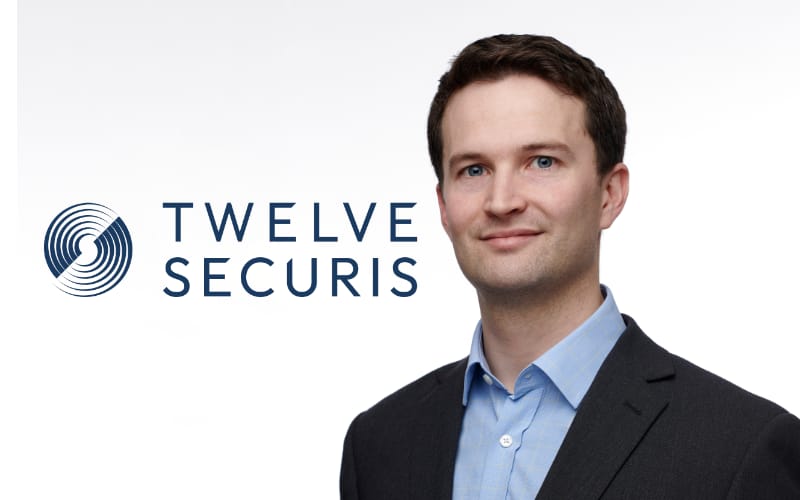 Speaking to Artemis around the 2026 Monte Carlo Rendez-Vous de Septembre (RVS) reinsurance industry event, Doris, who serves as Chief Investment Officer ILS at the specialist catastrophe bond and ILS investment management firm, highlighted that while the ILS market has continued to grow, discipline remains paramount.
Doris also added that heading into end of 2026 renewal negotiations and capital raising discussions, recent market expansion, while positive, makes rigorous risk selection increasingly critical.
“The ILS market has continued to grow rapidly, with record cat bond issuance and a broader investor base. That growth is positive for the asset class, but it also makes rigorous risk selection increasingly important,” Doris explained.
“It remains essential to provide investors with transparency around expected returns and the corresponding risk levels in their portfolio. Managers need to demonstrate that they are not simply accepting market consensus on terms, particularly where pricing becomes more competitive and terms may come under pressure. Quantifying the risk from secondary perils will likely be under scrutiny,” Doris continued.
“For cedants, the discussion should not just focus on price but on sustainable capacity with structures that work across the cycle. The objective should be to maintain the improvements in clarity around coverage that has attracted capacity into the market in recent years. In a market that is expected to soften absent any catastrophes, the managers that have access to a broad range of opportunities are best placed.”
Sticking with the January renewals, Doris explained that he believes competitive pressure will likely remain a feature of the ILS market if catastrophe activity continues to remain manageable and capital also continues to be abundant.
All of which leads the CIO to note that structural integrity remains a key focus for ILS.
“That may translate into pressure on pricing, but we do not believe managers should respond by giving away structural improvements achieved over recent years. Attachment points, covered perils, subject-business definitions and contractual clarity are fundamental components of risk,” Doris said.
Adding: “The key is therefore to distinguish between normal repricing as market conditions evolve and deterioration in the underlying quality of the risk being assumed.”
We then moved on to discuss investor sentiment and appetites for ILS and reinsurance investments as the industry begins to move towards year-end.
“Investor sentiment remains constructive. Investors continue to value the combination of attractive risk-adjusted returns, floating-rate characteristics and diversification from traditional financial markets,” Doris noted.
He continued: “At the same time, expectations need to remain realistic. As additional capital enters the market, spreads can tighten and the exceptional returns experienced post-2022 should not be regarded as a permanent benchmark.”
Turning to the catastrophe bond market, whilst issuance has continued to rapidly increase throughout 2026, spreads have also been compressed, driven by a combination of softening reinsurance rates, high levels of capital and strong investor appetite.
Given this, Doris stressed the need for the market to scale efficiently in order for it to maintain substantiality.
“This was still something of an open question last year. In H1 2026, however, the market processed record issuance alongside the highest level of maturities in its history, while execution remained efficient and spreads stabilised,” the CIO explained.
“The challenge therefore moves from whether the market has sufficient capacity toward ensuring that infrastructure continues to scale with it.
“We continue to believe digitisation has an important role to play. Standardisation can improve efficiency, but transactions also need sufficient flexibility to meet sponsors’ individual requirements. Greater digitisation of data throughout the transaction lifecycle can improve scalability without requiring every transaction to become identical,” Doris concluded.
Read all of our interviews with ILS market and reinsurance sector professionals here.
 View all of our Artemis Live video interviews and subscribe to our podcast.
All of our Artemis Live insurance-linked securities (ILS), catastrophe bonds and reinsurance video content and video interviews can be accessed online.
Our Artemis Live podcast can be subscribed to using the typical podcast services providers, including Apple, Google, Spotify and more.