



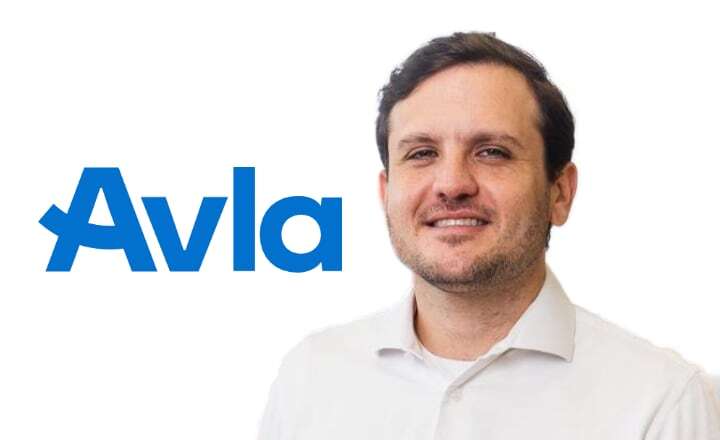
After working with Gálapagos Capital SSPE on a recent R$126 million offering of Insurance Risk Letters (LRS), Avla Brazil CEO Felippe Astrachan has said that LRS opens a door that allows the company to explore different types of risks that are not traditionally covered by the insurance and reinsurance market, while also remaining optimistic about the future of the expanding Brazil ILS regime.
 As we reported on May 26th, Gálapagos Capital SSPE successfully issued a R$126 million offering of LRS which is the first broadly distributed LRS arrangement since Brazil enacted its ILS regulations and activity commenced.
On this particular transaction, Gálapagos Capital collaborated with Avla Seguros, one of the top five financial lines insurance groups in Latin America, operating in Chile, Peru, Mexico, Brazil, and the USA.
The company recently assumed leadership in engineering risks in Brazil, while having already exceeded R$1 billion in written premiums since the start of its Brazilian operations.
Artemis spoke to Astrachan to find out what motivated Avla to explore the insurance-linked securities (ILS) market, and specifically the LRS instrument as a way to transfer risk.
“LRS open a door that allows us to explore types of risks that are not traditionally covered by the insurance and reinsurance market. Although we have a very broad, deep, and diverse market, there is a large number of risks that were still not being covered,” the CEO said.
“With the creation of the regulation, an opportunity arises for us to better serve our clients, delivering more solutions and capacities that were not available before. We studied it for a while until we found a model that worked both for Avla and for the investors.”
Given this, we then asked Astrachan to explain how efficiently the company found the process of entering into an LRS arrangement.
The CEO noted that much like anything that’s within its early stages, there are a number of structural challenges to overcome.
“This type of operation, open to the public, is something new in the Brazilian market, and this was the first issuance in this format. We had a test run, and two other operations where the risk itself brought the capital here, so this is the first one involving the investor. This new model would naturally involve many discussions and alignments, but that is part of the maturation of a debuting instrument,” Astrachan said.
He continued: “Over time, as risk transfer models, contracts, and market participants mature, the tendency is for the process to converge towards an increasingly efficient model. In future operations with the same risk profile, we believe that structuring can occur in a more agile manner. Although this first operation was complex, we do not see this as a problem, but as a natural stage in the process of development and consolidation of this market.”
Astrachan noted that investors initially reacted to Avla Brazil and Galapagos Capital’s R$126 million LRS offering with surprise, followed quickly by curiosity. As a novelty in the Brazilian market, LRS were largely misunderstood; despite the depth of the local capital market, few investors knew what they were or how they operated outside the country.
“Another point is that Brazil is currently in a moment where there is a lot of capital to invest but a lack of assets; with the operation well-structured, we had a very positive return. Once the understanding of how it works became more consolidated, demand increased considerably for this issuance,” the CEO added.
With Avla’s first LRS transaction transferring credit insurance-related risks to the capital markets, Astrachan shared whether the financial lines insurance group sees potential to utilise LRS for other types of risk.
“Without a doubt, the Brazilian market is still becoming familiar with evaluating and pricing risks that go beyond the financial aspect. This is a type of asset that does not yet have a consolidated track record in the country. Therefore, it is natural that the first operations are concentrated on risks closer to the reality already known by investors, such as credit and surety insurance, which have strong similarities with financial market instruments,” he explained.
As the model becomes more well known and stops being a novelty, the executive stated that the tendency is for investors to begin analysing other risk categories.
“This movement may take some time, but as the market develops a greater capacity for pricing and understanding these risks, it will be possible to expand the use of the instrument beyond the financial universe. The natural path begins with the financial market, but in the future, there will certainly be room to explore new frontiers and different types of risk,” he continued.
As the Brazil ILS regime continues to expand, Astrachan said that Avla remains optimistic and that the company is looking at new ways to expand.
“We are very optimistic. We are already studying new operations and working to expand, in the future, both the volume of issuances and the base of investors involved. Who knows, we might even be pioneers in building this market from the perspective of those who structure the operations and originate the risks,” he said.
Concluding: “There is significant interest from investors, and for Avla, this initiative complements the company’s core business. Insurance risk is an asset that generates a lot of interest in the market, and as this ecosystem evolves, we will be able to evaluate new opportunities and applications for the instrument.”
You can find all our coverage of Brazil’s ILS regime under this archive.
Read all of our interviews with ILS market and reinsurance sector professionals here.
 View all of our Artemis Live video interviews and subscribe to our podcast.
All of our Artemis Live insurance-linked securities (ILS), catastrophe bonds and reinsurance video content and video interviews can be accessed online.
Our Artemis Live podcast can be subscribed to using the typical podcast services providers, including Apple, Google, Spotify and more.