



As investor and issuer interest in catastrophe bonds remains high following a record-breaking first half of the year for cat bond issuance, Hiscox Capital Partners is leveraging decades of traditional reinsurance relationships to navigate an increasingly crowded ILS market, Vincent Prabis, Managing Principal of Hiscox Capital Partners told Artemis.
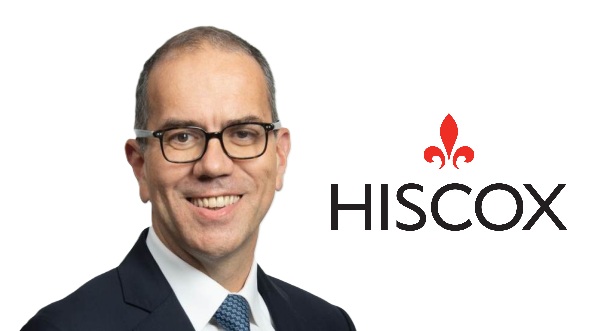 Speaking with us in an interview at the Monte Carlo Rendez-vous event, Prabis explained that rather than treating catastrophe bonds as standalone financial instruments, Hiscox Capital Partners approaches the market with the same qualitative underwriting framework applied to its traditional balance sheet business.
Hiscox Capital Partners, the division of Hiscox Re that encompasses insurance-linked securities (ILS) investments and quota-share partnerships, grew its overall ILS assets under management (AUM) by almost 93% in the first half of 2026 to $2.9 billion.
In light of this significant increase, we asked Prabis to explain how Hiscox Capital Partners is maintaining pipeline quality amidst this influx of capital.
“We’ve been in the insurance risk business for 125 years and we’ve been doing reinsurance for 50 years. We’ve had capital partners for over 20 years, so for us it’s a natural evolution,” Prabis explained.
“The $2.9bn figure is quite impressive, and we’re very pleased with that. But the market, particularly on the cat bond side, is helping us to support that. We’ve had record issuance for the first half of the year and the market is on track to hit another record year.”
He continued: “On the traditional side, we have further room to grow, but it’s not to just grow for the sake of growing. We have not sacrificed anything for that growth, and that is not what we want to do. We work with other capital partners as there are many reasons why they want to work with us, but one of them is definitely the fact that we are an active participant in the ILS space.
“So we have skin in the game, but we also manage our capital. We just don’t do it on behalf of the third-party capital, and that’s important to us.”
The catastrophe bond market has already had a memorable year with the opening half of 2026 delivering a new record high for the market, with almost $18 billion of issuance recorded.
However, given that this over subscription can sometimes lead to squeezed spreads and expanded coverage terms, Prabis went on to explain how Hiscox Capital Partners uses its scale to secure favourable allocations.
“The cat bond market has been a recent part of our growth, but it’s important to remember that cat bonds ultimately is an integral part of traditional insurance. All of the issuers of cat bonds, have the same cedents that we know well and have worked with for decades.
“We and our investors appreciate that we approach and issue cat bonds with the same qualitative approach as we do the traditional market. So for us, it’s a completely natural evolution of what we do,” Prabis said.
With reinsurance capital levels having continued to grow, momentum has also heavily shifted in the ILS market notably in the catastrophe bond market, while investor appetite for sidecars has also heavily increased over the last year too.
As ILS becomes increasingly crowded, Prabis outlined how Hiscox Capital Partners helps investors regarding transparency and gaining access to the market.
“A key part of our recent success has been shifting the conversation from products to solutions. Our focus is on institutional investors that are looking for tailored ways to access the asset class. Rather than offering standardised products, we work with partners to structure solutions around their specific objectives, risk appetite and portfolio requirements.”
“They know what they want, and when we have those discussions we realise they’re not looking for a particular product. They have their own goals and they’re looking for a team that they can trust and work with easily, and then we find a solution together,” Prabis noted.
He added: “The vast majority of our ILS assets are managed through bespoke mandates and managed accounts, reflecting demand for tailored solutions. We also offer commingled funds, but they represent a smaller part of the platform and help demonstrate our underwriting and portfolio construction capabilities.”
Lastly, as the industry begins to shift attention towards year-end, negotiations really begin kicking off at Monte Carlo, in which Prabis emphasises that Hiscox will remain selective with its ILS capital deployment despite talk of further rate softening.
“Discussions for 1/1 really start here at Monte Carlo. It is too early to say what we’ll do, but we know that we will not overextend ourselves. We believe we will find good risk to allocate to the quality of the capital we have. But it starts with a discussion here with our partners,” Prabis told Artemis.
“At the moment, we are in the middle of the hurricane season, while there’s nothing in the water, we’ll see what happens. Don’t forget, its always earthquake season, so that must always be watched over. So we’ll see what happens, but it starts with a discussion, and it will develop over the next few weeks and months.
Prabis concluded: “There are obvious discussions about further rate softening. We will see. We’re still finding rate adequate deals, and we’re coming from a generational hard market.”
Read all of our interviews with ILS market and reinsurance sector professionals here.
 View all of our Artemis Live video interviews and subscribe to our podcast.
All of our Artemis Live insurance-linked securities (ILS), catastrophe bonds and reinsurance video content and video interviews can be accessed online.
Our Artemis Live podcast can be subscribed to using the typical podcast services providers, including Apple, Google, Spotify and more.