



AM Best and reinsurance broker Gallagher Re have suggested that the areas in and around Spokane, Washington will suffer considerable insured losses from the ongoing wildfires, with Gallagher Re indicating that it has the potential to be a billion-dollar insured loss event, and could become the costliest insured wildfire event in Washington’s history.
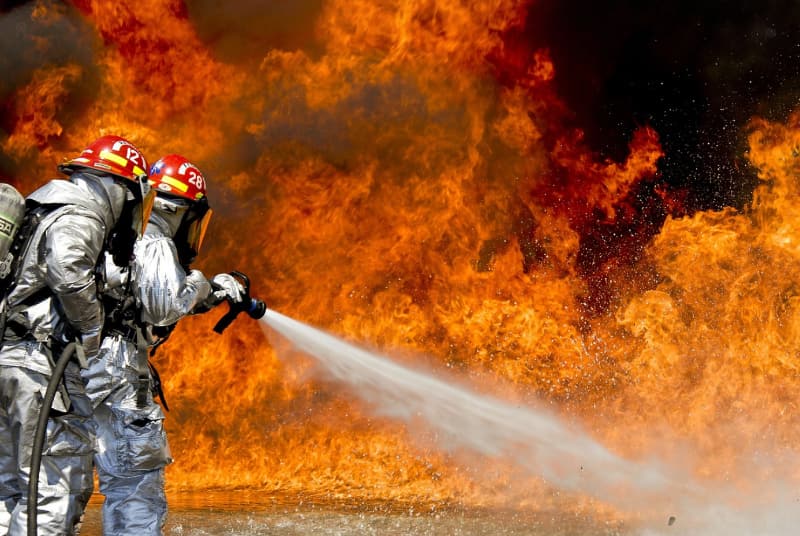 For context, three major wildfires, together called the Complex Fire, to date have burned over 10,000 acres, destroying more than 700 homes and forcing the evacuation of approximately 65,000 people.
In its report, rating agency AM Best said: “At its current damage level, the losses do not appear to be in the same order of magnitude as the 2025 California wildfires and likely will have minimal impact on the current softening prices in the reinsurance market; however, there could be a reassessment in localized areas and where reinsurers feel they have to re-evaluate some of their models.”
AM Best also noted that the magnitude of insured losses from the event will depend on the amount of coverage secured by the affected home and business owners.
The agency also explained that demand surge and ongoing inflationary pressures may also drive up insurance claims-related costs.
In addition, AM Best’s report also highlighted that, as expected, insurance companies whose property portfolios are concentrated in Washington will likely feel the effects of wildfire losses the most.
“If the losses are sizable enough, they could result in the homeowners’ insurers in the state being assessed by the state-mandated Fair Access to Insurance Requirements plan (FAIR). Washington’s FAIR plan is similar to California’s FAIR plan, as it is not a taxpayer-funded agency, and all insurance companies in the state are required to be members,” AM Best explained.
Adding: “Like California, the assessment rules are that property insurers in the state are assessed based on the share of property insurance premiums they write in the state.”
Furthermore, data from AM Best also highlights that there are several major catastrophe bond sponsors with meaningful exposure in Washington, including State Farm, Allstate, USAA, and Travelers.
Consequently, depending on the severity of total insured losses and impacts to any cat bond sponsors, these wildfire events could drive some erosion of retention layers underneath any aggregate catastrophe bonds that are exposed to these events.
It seems less likely, at current damage levels, to be an event of any concern for per-occurrence catastrophe bond structures.
David Blades, associate director, Industry Research and Analytics, AM Best, commented: “In the longer term, depending on the magnitude of the insured losses, primary insurers with a concentration of their homeowners’ or commercial property portfolio in areas within Washington state may re-examine their appetite for wildfire risk given how unpredictable they can be with respect to location, intensity and seasonality.”
Meanwhile, in its own reporting on the event, Gallagher Re states that based on the volume of properties confirmed as destroyed (700+), and after assessing the value of homes and businesses in the impacted areas of Spokane, it is expected that insured losses will minimally reach into the hundreds of millions (USD); with a plausible chance and likelihood of this becoming a billion-dollar event.
As mentioned, the broker also suggested that this is expected to rank as one of the costliest wildfire events for the insurance industry, if not the costliest, in the state of Washington’s history.
“The overall economic cost will be even higher. Fire officials suggest that as many as 1,100 properties may have been damaged or destroyed based on aerial imagery,” Gallagher Re said.
As we reported earlier this week, wildfire risks are increasingly being covered in the catastrophe bond market, with the amount of risk capital deployed to support cat bonds that have some exposure to wildfire having soared to $5.183 billion year-to-date, already nearing the full-year record of $5.55 billion for the peril seen in 2025.
 View all of our Artemis Live video interviews and subscribe to our podcast.
All of our Artemis Live insurance-linked securities (ILS), catastrophe bonds and reinsurance video content and video interviews can be accessed online.
Our Artemis Live podcast can be subscribed to using the typical podcast services providers, including Apple, Google, Spotify and more.