



The extent to whether catastrophe bonds have truly become a mainstream investment product was a key discussion point during Artemis’ 2026 Bermuda ILS Executive Roundtable, in which experts from across the ILS sector discussed whether rated bonds, pooled ILS offerings, and enhanced secondary liquidity are ready to unlock vast new sources of traditional capital.
 In partnership with Appleby and Moody’s, Artemis held its seventh Bermuda insurance-linked securities (ILS) executive roundtable in Hamilton in April, bringing together leaders from across the expanding sector to discuss current market trends and future opportunities.
During the roundtable, participants discussed how it feels like the cat bond market has reached somewhat of an inflection point, in terms of having had such strong performance over the last few years. In turn, this has expanded awareness of the asset class at a time when the models are making decent advances, as well as how other technology is being deployed to deliver greater transparency.
Given this, participants discussed whether they believe a confluence of factors have served to build up investor demand within the cat bond market.
“It’s probably a combination of many factors. Capital, both ILS investors and balance sheets, left the property cat space for different reasons. For some, it was concerns around sufficient pricing for climate change and social inflation, for others, it was appetite for volatility. The industry also had some structural issues with trapped collateral and liquidity,” explained Laura Taylor, President of Nephila Holdings.
She continued: “This, of course, created a market dislocation and an increase in prices to compensate investors for these uncertainties. The structural concerns have been addressed by most managers, and we have seen a positive impact on social inflation from recent legislation.”
Taylor also stressed that the past several years of performance within the market have helped address some concerns surrounding climate change, as well as increased tolerance for volatility risk.
“This is causing prices to shift again, eroding this excess premium that was compensating for the uncertainty, but the key to continued growth will be how the industry demonstrates price sufficiency over time, with and without events occurring, while competing against other asset classes,” Taylor continued.
However, achieving that broader, mainstream status may require looking beyond the current pool of specialised ILS allocators.
Christer Pehrson, Global Head ILS Client & Market Development at Moody’s Analytics, suggested that structural evolution, specifically regarding credit ratings, could be key to unlocking traditional fixed-income capital.
“The cat bond market is still not mainstream. Many allocators are not yet prepared to invest in cat bonds. Robust cat models are key, and from Moody’s Analytics clients, we hear that there could be value in ratings for individual cat bonds, or pools of cat bonds such as a CLO structure, as there are investors who are sensitive to ratings and want to compare them to traditional fixed income. So, I’d be interested to hear your take on what you see,” Pehrson said.
Ben Adolph, Chief Underwriting Officer, Non-Life, at Leadenhall Capital Partners, said: “I think cat bonds are becoming mainstream already. It doesn’t seem to be an issue at the moment of raising money for cat bonds.”
Adolph did highlight, however, how Leadenhall is beginning to see more developments on the private placement side, where a convergence between ILS capital and traditional balance sheets is taking place.
“Where we are starting to see more developments is on the private placement side and the convergence play coming through between ILS capital and the traditional balance sheet market. Whether it’s rated balance sheets, some form of hybrid private placement, or efforts to make private placements more liquid, more tradable, there has been a focus on ratings in many cases to help facilitate some of these developments (in private placement). So, I’d say that’s where I’d see more development in terms of rating transforming vehicles, rather than on 144A, which already is tradable and seems to be widely accepted,” he explained.
Furthermore, Niraj Patel, Head of AXA XL Alternative Capital, ILS Capital Management Unit, provided some historical context. With the executive reminding participants that the market’s relationship with ratings has fundamentally shifted over time.
“Many years ago, most cat bonds were rated, which was particularly appealing to investors at the time. Essentially, back then, a rating was mandatory; without which it was difficult to place cat bonds. This hasn’t been the case over the last few years, given that the market has shifted now to specialized managers and investors,” Patel explained.
However, as Pehrson added, from Moody’s perspective, bridging the gap between specialised ILS players and standard fixed-income investors remains a long-term goal that will ultimately rely on robust analytics.
Pehrson said: “Moody’s RMS cat models are market leading and give a robust way to quantify risk, and we’re seeing investors become more comfortable taking that risk. We expect the cat bond market to become more mainstream within fixed income, which should attract new capital, support growth, and help close the protection gap.”
Lastly, Brad Adderley, Managing Partner Bermuda at law firm Appleby, challenged the participants to consider whether true secondary market trading is the missing link.
“On the topic of liquidity, we often hear about secondary trading of cat bonds. But if it ever did happen, whether through the BSX or a new platform, would that grow that market more than anything else? How important is it that the secondary trading platforms which people talk about ever take off? Because, as long as I’ve been doing this, I’ve heard about it every year. I’ve had clients who started it and did not finish it for various reasons. We’ve heard today that the market isn’t mainstream, but would it become mainstream if it were more liquid?,” Adderley said.
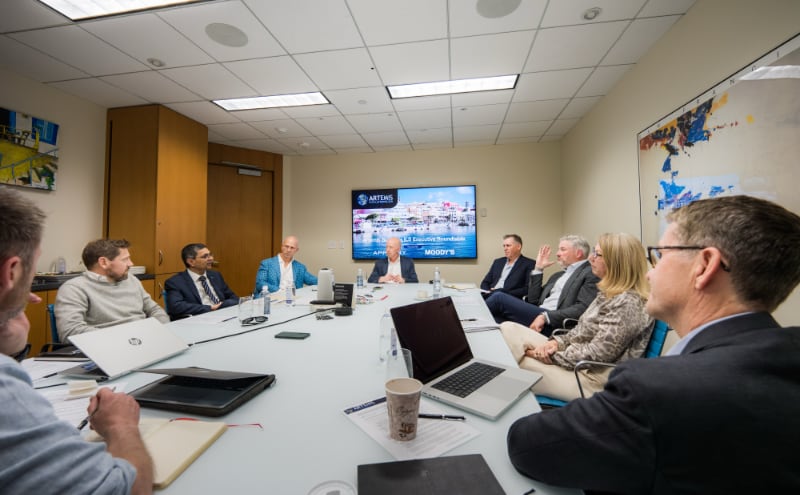
The roundtable event saw a wide-ranging discussion of ILS market conditions and opportunities, so read the full report to explore our participants opinions.
For this year’s Artemis Bermuda ILS Executive Roundtable, we were joined by the following participants:
- Brad Adderley, Managing Partner Bermuda, Appleby.
- Christer Pehrson, Global Head ILS Client & Market Development, Moody’s Analytics.
- Adam Smith, Partner and Insurance Sector Lead for KPMG Islands Group.
- Adam Champion, CEO, Capital Markets, Price Forbes Re.
- Laura Taylor, President, Nephila Holdings.
- Ben Adolph, Chief Underwriting Officer (Non-Life), Leadenhall Capital Partners.
- Niraj Patel, Head of AXA XL Alternative Capital, ILS Capital Management Unit.
Download your copy of the 2026 Artemis Bermuda ILS Executive Roundtable here.
Reports from previous Artemis executive roundtable events can be downloaded here.
 View all of our Artemis Live video interviews and subscribe to our podcast.
All of our Artemis Live insurance-linked securities (ILS), catastrophe bonds and reinsurance video content and video interviews can be accessed online.
Our Artemis Live podcast can be subscribed to using the typical podcast services providers, including Apple, Google, Spotify and more.