



The performance of insurance-linked securities investment fund strategies, across catastrophe bonds and private ILS, has continued to rise through October 2026 with their upward momentum continuing, as the average ILS fund performance reached 1.07%, as measured by the ILS Advisers Fund Index.
 Two months ago, ILS Advisers reported August returns provisionally at 1.39%, but once all the data was in from ILS managers the figure for that month was substantially higher, standing at a 1.60% return for the period.
ILS Advisers then reported September returns reached 1.55%, which became the second-highest monthly performance for the sector in 2026, only to the updated August figure.
For October 2026, ILS Advisers reports the average return across its Index constituents was 1.07%, the third highest month of the year to-date for this benchmark.
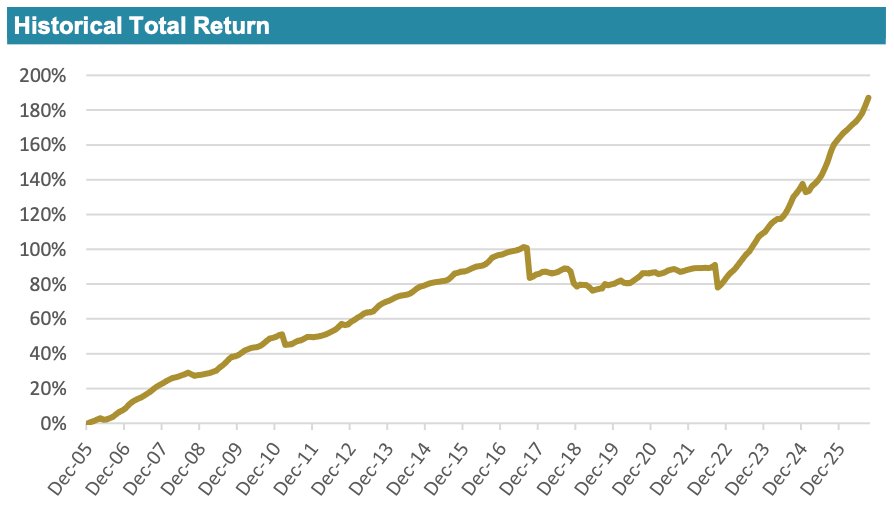
On that basis, the average ILS fund performance for the first ten months of 2026 now stands at 9.59%.
“October saw the Atlantic basin’s first hurricane of the year, with Isaias making landfall as a Category 2 storm near Destin, Florida, a relatively sparsely populated area. Initial insured loss estimates range from USD 1–5 billion, keeping losses largely within primary insurer retentions and making Isaias a relatively minor event for the ILS market,” ILS Advisers noted.
ILS Advisers continued: “In the Pacific, Hurricane Simon passed just offshore of Mexico’s coast as a Category 4 storm, narrowly missing the track and central-pressure thresholds required to activate the parametric trigger of a World Bank issued catastrophe bond. Finally, a magnitude 7.7 earthquake struck Panama during the month, causing localized structural damage while leaving Panama City largely intact.”
Whilst October did see some meaningful natural catastrophe activity, ILS Advisers stated that none of these events are expected to have a meaningful impact on the ILS market.
In addition, October also marked the seasonal reopening of the primary market.
ILS Advisers observed that a solid fourth-quarter pipeline of cat bond issuance continues to build across multiple perils and regions, combining established renewals with first-time sponsors tapping into the market to secure meaningful protection.
Artemis’ data also shows that total issuance of Rule 144A catastrophe bonds is already tracking towards a new annual record high in 2026.
As of this week our data shows settled catastrophe bond issuance across both Rule 144A and the private cat bond deals we’ve analysed and tracked has already surpassed the $20 billion threshold and reached $22 billion so far in 2026.
Across the pure catastrophe bond funds tracked by the Index, the average return for October was 0.86%. While for the group of ILS funds that also allocate to private ILS positions, to varying degrees, the average monthly return was 1.47%, another particularly strong month for the asset class.
ILS Advisers also said that every reporting fund posted positive returns in October, with monthly performance ranging from 0.62% to 3.31%.
With the average ILS fund performance Index now standing 9.59% for the year, 2026 remains highly on-track for this Index to deliver a return in the low double-digits.
As we’ve explained before, this will compare very well versus history and could end up resulting in one of the four or five best performances for this benchmark since it began tracking the sector in 2006.
As a reminder, you can track the ILS Advisers Fund Index here on Artemis. It comprises an equally weighted index of 37 constituent insurance-linked investment funds which tracks their performance and is the first benchmark that allows a comparison between different insurance-linked securities fund managers in the ILS, reinsurance-linked and catastrophe bond investment space.
 View all of our Artemis Live video interviews and subscribe to our podcast.
All of our Artemis Live insurance-linked securities (ILS), catastrophe bonds and reinsurance video content and video interviews can be accessed online.
Our Artemis Live podcast can be subscribed to using the typical podcast services providers, including Apple, Google, Spotify and more.