



Brazil’s developing insurance-linked securities (ILS) market could create a clear route for catastrophe exposures that historically have remained uninsured or concentrated on traditional balance sheets to access institutional capital, Mirelle Pereira, founder of risk intelligence company Santé told Artemis.
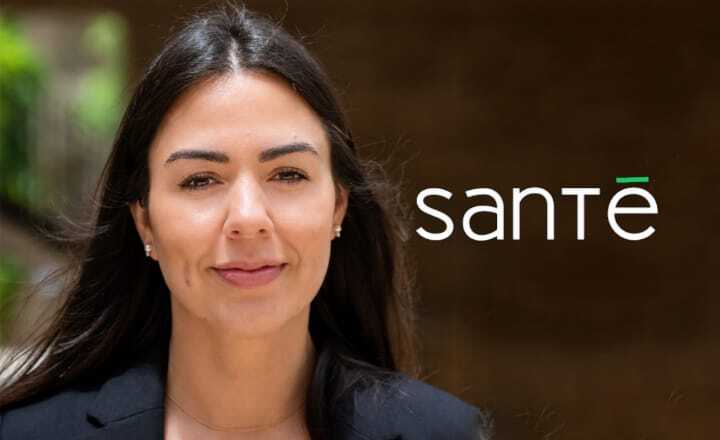 With activity picking up in Brazil’s ILS market and an increasing number of Brazilian Letra de Risco de Seguro (LRS) transactions completing, Pereira, recently spoke to Artemis to discuss how Brazil’s LRS instrument can help broaden the range of risks available to ILS investors.
“The country has already demonstrated that its domestic securitization framework can bring insurance risk to capital markets. Four LRS transactions had been completed by May 2026, including a R$126 million issuance by Galápagos Capital SSPE, the largest under the regime at the time,” Pereira told Artemis.
She continued: “The potential scope extends beyond the risks represented in those initial transactions. Drought, river flooding, extreme precipitation, wildfire and agricultural exposures account for significant economic losses in Brazil, but much of this risk remains uninsured or retained by insurers, companies and governments.”
Pereira added that the main constraint is whether these exposures can be represented in a form that investors can understand, price, and assume
Attention then turned towards Brazil’s catastrophe protection gap, which Pereira states illustrates the scale of the country’s underlying exposure.
Data from the National Confederation of Insurers (CNseg) and Ernst & Young (EY) shows that 67 significant climate events generated approximately R$184 billion in economic losses in Brazil between 2022 and 2024, with only 9% of those losses being covered by insurance.
At the same time, the protection gap is particularly pronounced in less insured regions, such as the North and Northeast, where less than 2% of climate-related economic losses were covered by insurance.
However, Pereira emphasised that these figures do not immediately represent potential ILS issuance.
“A large economic loss does not automatically translate into a securitizable risk. The relevant opportunity lies in identifying portions of that exposure that can be clearly defined, independently measured and structured at sufficient scale,” she said.
“Brazil has an advantage in the availability of physical risk data. Decades of environmental and geospatial observations provide information on precipitation, river discharge, soil moisture, temperature, vegetation and burned area.”
“The more difficult task is establishing how those physical conditions relate to financial loss,” Pereira added.
Moreover, establishing this financial relationship is crucial given that Brazil’s catastrophe exposure varies significantly by geography and sector.
Pointing to El Niño as an example, Pereira highlights how the NOAA’s Climate Prediction Center sees a greater than 90% chance of a very strong event during the Northern Hemisphere fall and winter of 2026–27.
In light of this, she explained that a number of Brazilian agencies are currently monitoring potentially varying regional impacts, such as above-average rainfall and heightened flood risks in certain areas of the South, as well as drier conditions in parts of the central-northern region of the country.
However, for individual portfolios, the financial impact will be influenced by factors such as geography, sector, and exposure. Consequently, the intensity of the climate phenomenon by itself cannot serve as an indicator of portfolio loss, Pereira further noted.
“Brazil cannot be treated as a single catastrophe exposure. The variables associated with financial losses vary substantially by geography, sector and portfolio,” Pereira noted.
She continued: “For parametric structures, an independently observable trigger is only useful if it remains sufficiently representative of the underlying financial exposure. A rainfall or river-level index can accurately describe the physical event while still diverging from the losses experienced by a portfolio.
“That basis risk becomes more important for secondary and cumulative perils such as drought, flood and wildfire, where losses may result from several interacting variables rather than a single extreme event. Data availability is only the starting point. For a parametric structure to provide effective protection, the trigger needs to maintain a defensible relationship with the financial exposure being transferred.”
To end, Pereira outlined how Brazil’s LRS market could help effectively broaden the range of risks available to ILS capital, and how some Brazilian exposures may lend themselves more readily to this type of structuring.
Pereira noted that agricultural drought benefits from long historical records of precipitation, temperature and soil moisture, while highlighting that river flooding can also be assessed by using hydrological observations such as discharge and water levels.
“The opportunity is therefore not simply to create new indices, but to determine which exposures can be converted into transparent and investable risk with acceptable basis risk,” Pereira said.
Pereira indicated that achieving this scale will require a coordinated system, which involves insurers and reinsurers with access to exposure data, brokers and structurers capable of designing transactions, modelling capabilities that connect physical events with financial losses, and SSPEs being able to issue the securities and investors willing to assume the resulting risk.
“Brazil’s LRS market is still at an early stage, but the infrastructure is now operational. Market participants are already considering its application beyond risks traditionally covered by insurance and reinsurance,” Pereira added.
Concluding: “For catastrophe risk, further development will depend on finding portfolios with sufficient scale, credible historical relationships between physical events and losses, and structures that provide meaningful protection to sponsors while meeting investor requirements.
“If those conditions can be established, Brazil’s large protection gap may represent more than an insurance challenge. Parts of that currently retained or uninsured exposure could become a new source of risk for the growing global ILS market.”
You can find all our coverage of Brazil’s ILS regime under this archive.
Read all of our interviews with ILS market and reinsurance sector professionals here.
 View all of our Artemis Live video interviews and subscribe to our podcast.
All of our Artemis Live insurance-linked securities (ILS), catastrophe bonds and reinsurance video content and video interviews can be accessed online.
Our Artemis Live podcast can be subscribed to using the typical podcast services providers, including Apple, Google, Spotify and more.