



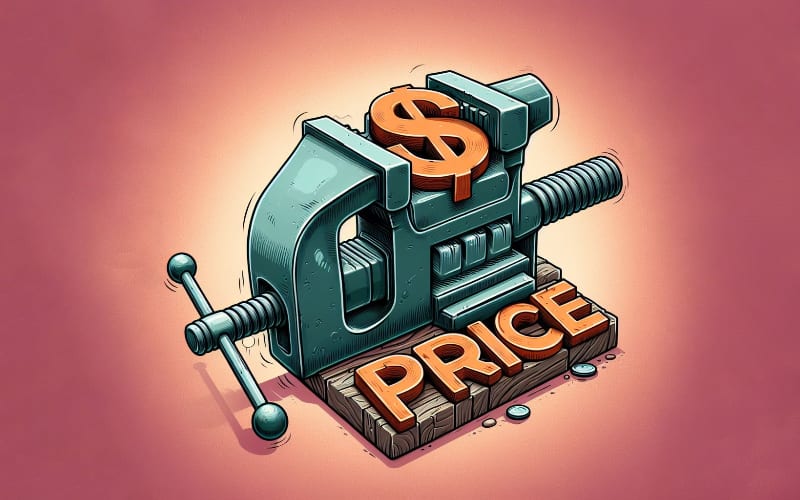
At the January renewals, property catastrophe reinsurance and retrocession markets both saw rate declines in the mid-teens. Most still agree that rate adequacy remains, while attachments stay at their current higher levels, but KBW’s analysts highlight how this may only drive compounding price competition over-time.
 KBW’s analysts held a panel discussion with experts from the industry to dissect the renewal outcomes and while they don’t quote Howden Re’s David Flandro, Aeolus Capital Management’s Aditya Dutt, or Aon Reinsurance Solutions’ Michael Van Slooten directly, they did provide some insights into the consensus views that emerged during the call.
“Overall, the panelists observed mid-teens risk-adjusted global property catastrophe reinsurance rate decreases (driven by rising supply), and also broadly agreed that overall catastrophe reinsurance rate levels remain at least adequate,” the analysts explained.
Adding, “Declining catastrophe reinsurance pricing and overall primary rate softening (ranging from persistent property rate decreases to slowly decelerating casualty increases) imply rising expected reinsurance combined ratios.”
They note that the January 1st 2026 reinsurance renewals have seen the largest year-on-year declines in catastrophe reinsurance rates since 2019, with broad reductions across property reinsurance and retrocession.
Sustained earnings of the traditional reinsurers and insurance-linked securities fund inflows “drove a far bigger change to supply curves than to demand curve,” they explained.
Terms and conditions remained largely stable, although in nominal terms inflation is “slowly eroding real attachment points.”
There was some moderation in terms, with greater inclusion of covers for terror, riots, and cyber losses, while frequency protection is increasingly available, although “not remotely at the levels available in past soft markets,” the KBW analysts said.
Interestingly, they also highlighted that, “Recent years’ non-concurrent terms and conditions (which we also see as a hard market phenomenon) also largely disappeared at 1/1/26.”
On the return potential of the reinsurance market, the speakers agreed that adequacy remains.
KBW’s analysts stated, “Our panelists also broadly agreed that overall expected returns appear adequate (with the frustratingly accurate observation that adequacy is hard to evaluate), and that terms and conditions are unlikely to collapse, especially if the top-7 or 8 reinsurers – who are now armed with significantly better data and analytics than in the past and who no longer compete with the last cycle’s relatively large number of mid-cap (mostly Bermudian) reinsurers – themselves hold firm.”
But, “The positive takeaway is still-strong near-term returns; the more skeptical viewpoint is that these returns will similarly sustain compounding price competition.”
The growth of reinsurance capital, as detailed in our recent article, is driven by retained earnings of traditional reinsurers, alongside rapidly expanding ILS capital in both catastrophe bonds and reinsurance sidecars, in the main.
With return adequacy remaining, absent major loss activity that erodes some of the capital base of both traditional and ILS sector, the competition on price is seen as set to persist.
KBW’s analyst team state, “We believe that both of these are true (and we also agree that better analytics – including catastrophe modeling – should keep the industry from fully repeating its past self-inflicted damage), but in the near term we expect investors to focus mostly on the latter, implying pressured multiples.”
Capital build-up is also likely on the primary insurer side, as cedents are seen as tending to keep the savings from reduced reinsurance costs, rather than buying significantly more coverage at this time.
Summing up the panel discussion, KBW’s analysts wrote, “Our panelists attributed what we see as the current cycle’s relative steepness in part to dramatic 2023-era rate increases that allow more room for rate decreases, with one executive noting that the catastrophe reinsurance pricing cycle (which generally dates back to 1992’s Hurricane Andrew) shows sequentially higher highs and higher lows, probably reflecting growing – we’d say improving – risk awareness among both buyers and sellers.
“We think this implies a few more years of declining catastrophe reinsurance rates, but with smaller decreases than those reported for January 2026.”
Read all of our reinsurance renewals news.
 View all of our Artemis Live video interviews and subscribe to our podcast.
All of our Artemis Live insurance-linked securities (ILS), catastrophe bonds and reinsurance video content and video interviews can be accessed online.
Our Artemis Live podcast can be subscribed to using the typical podcast services providers, including Apple, Google, Spotify and more.