



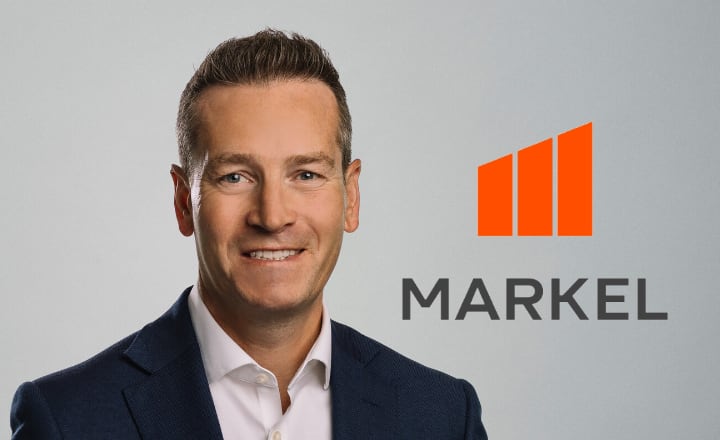
During the Markel Group first-quarter earnings call yesterday, Simon Wilson, CEO of Markel Insurance, said he is concerned about the competitive tendencies of certain MGA’s that are backed by sidecars and private capital, who he believes may be chasing US casualty risk pricing down in areas of the market where caution is warranted.
 With casualty sidecar structures all the rage, as managing general agents (MGA’s) and larger global re/insurers look to partner with private capital on casualty insurance and reinsurance portfolio risks, it was the first mention we’ve heard where an executive raised concerns during a major insurer’s earnings call.
It’s worth noting that casualty reinsurance sidecar structures are far from created equal, with a significant variation in strategic rationale for sponsoring them, very bespoke structures, a wide-range of levels of alignment between parties, and customised terms across both the larger dedicated casualty sidecar vehicles that have been announced and private sidecar arrangements.
Anecdotally, it appears to be felt across the market that alignment is perhaps strongest where retention is highest in the economics of the subject business, with sponsors retaining significant skin in the game.
MGA-backed sidecars are often seen as more of a growth play, leveraging the appetite of third-party investors to fuel underwriting capacity (companion off-balance-sheet capital), which of course there is nothing wrong with. Access to efficient capital and capacity can be a clear differentiator and an accelerator of business plans for MGA’s.
Strategically, MGA’s typically partner with reinsurance balance-sheets or third-party capital via fronts. But sidecars can provide a form of balance-sheet that is owned, of sorts, which if the terms and structure are right can align them closely with investors on the goals for the book underwritten, or risks to be written going forwards.
But Wilson feels some of the MGA’s backed by sidecar capital might be driving prices down in certain areas of US casualty risk.
Even within the MGA space, sidecar structures come with very bespoke structures and terms, with a wide-range of cession rates as well, making comparisons between them challenging. In addition, the results of all sidecars and how the underlying business is performing is typically opaque or not reported, given the private nature of such arrangements.
Markel Insurance’s CEO was discussing the US casualty sector and said that competition appears to be increasing there at this time.
Wilson explained, signalling a note of caution, that where Markel had previously been seeing rate increases in the US casualty book, in recent months those areas are coming under increasing pressure.
“Perhaps one of the reasons for that is as the property market has been become more competitive, some of those underwriters are now looking for alternative ways to deploy capital and then moving into the casualty market,” Wilson said.
Adding, “I will say this, and I can’t tell you how much I mean it, we will not follow a casualty market down, and we will not lose discipline in that area.
“It’s so critical to us that we keep that casualty portfolio in the position which we’ve got it to now, just being in areas where we feel confident that we can make an underwriting profit over a long period of time.”
Markel has been optimising its US casualty book in recent quarters, a process Wilson said results in having to “say no to a lot of brokers that we used to say yes to,” but he said this heavy lifting is now completed and he feels “very, very good about where the portfolio is at the moment.”
Later in the call, Wilson turned to his concerns over the US casualty market again, saying, “What we will be watching for though is this pricing dynamic which I mentioned in comments earlier. If people start to get ultra-competitive in US casualty, that is where things go badly wrong in this industry.”
He continued to explain, “I am concerned and I’ll say this on the call, about a number of kind of new entrant MGAs in the space backed by sidecars and private capital, effectively, which in some areas have been very competitive, in areas that we know have caused significant losses in the past.
“That is where people might get hurt, certainly financially, I think over the next few years.”
Wilson further stated, “We’re going to be staying out of those games, and we’re going to keep focusing on the areas where we know we can perform and bring some tremendous value.”
Wilson said the Markel casualty team is focused on driving positive results, with the shaping of the casualty portfolio having been undertaken and performance having improved, a trend he expects to continue.
With all the excitement over growth in casualty sidecar structures and third-party capital backed casualty quota share reinsurance arrangements, Wilson’s comments perhaps come at a pertinent time.
As we said, not all of these casualty structures are equal and alignment levels differ greatly between them, as do the strategic rationales for launching them in the first place.
However, we’d also suggest that leveraging sidecar capital can elevate the efficiency of underwriting capacity for an MGA as well, given the nature of the vehicles and the fact they can enable differentiated investment strategies to be applied across the premium float they generate. That might enable an MGA to write business at rates that are seen as very competitive by a traditional balance-sheet player.
But, with Wilson’s comments in mind, it’s going to be worth watching closely for any indications that surface for how these structures might perform over-time, as well as who (if anyone) might have been more competitive than perhaps was sensible in notoriously volatile areas of the casualty risk marketplace.
How much information may surface in time remains to be seen and given the longer-tailed nature of the business it could be years before any indications of performance emerge.
One thing is certain though, when it comes to casualty sidecars, given the wide-ranging structures, terms and levels of alignment, it is safe to assume that not all will perform equally for their backers.
 View all of our Artemis Live video interviews and subscribe to our podcast.
All of our Artemis Live insurance-linked securities (ILS), catastrophe bonds and reinsurance video content and video interviews can be accessed online.
Our Artemis Live podcast can be subscribed to using the typical podcast services providers, including Apple, Google, Spotify and more.