



Following the launch of Korra’s Deal Analysis platform, Samir Shah, Co-founder and CEO of Ledger Investing, the parent company of Korra, outlined during an interview with Artemis how the tool aims to bridge the long-standing gap between traditional re/insurance and capital market investors.
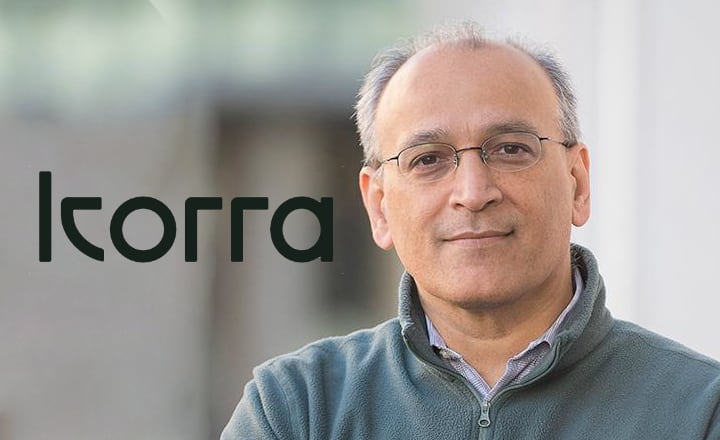 Korra launched its Korra Deal Analysis application earlier this month. The platform is expected to help market participants analyse the quantitative and qualitative aspects of casualty, non-catastrophe property, and specialty reinsurance and ILS opportunities.
Another key feature of Korra Deal Analysis, is that it also allows insurance-linked securities investors and collateralized reinsurers to use the same analytical framework to effectively evaluate and analyse reinsurance submissions on economic terms such as IRR and MOIC, instead of using accounting metrics like combined ratio.
During a recent interview with Artemis, Shah explained that the company decided to build the Korra Deal Analysis application to effectively help bridge the gap between re/insurance and the capital markets.
“We originally built this tool for our own analysis. Our focus from when Ledger Investing launched Korra has been to grow the ILS market beyond property catastrophe and into casualty. And in order for us to do that, we needed to develop dedicated analytics for casualty. Unlike cat, there are no established third-party casualty models you can simply license, so we had to build everything ourselves,” Shah told Artemis.
“Throughout the last few years, the casualty market has gained significant attraction and growth, which has been great to see. Given this, we decided to package everything we built for internal use and launch it as a separate business for external clients.”
He continued: “It’s important to distinguish though, that through Korra Analysis, the key gap that we are filling is the divide between the re/insurance markets and capital markets. They both operate as two very different worlds, with distinct metrics, and objectives, and bridging the gap between the two is essential to execute deals. Very few across the industry have the time or possess the ability to fully master both sides of these markets, but scaling the market requires a proper bridge, and that is what our deal analysis workflow provides.”
Shah further explained that the insurance side evaluates deals on accounting basis using metrics such as loss ratios and combined ratios, but emphasised that these are not economic metrics, and that they do not show a capital provider’s true profit. Conversely, capital markets evaluate deals on an economic basis using metrics like Internal Rate of Return (IRR) and Multiple on Invested Capital (MOIC).
“The Korra Deal Analysis workflow bridges these two approaches. Users can input standard loss ratios, and our system is able to convert them into the economic metrics required by the capital side. This is equally critical for the risk side as well. When reinsurance brokers go to traditional reinsurance markets, everyone speaks the same language of loss ratios. But when they venture to the capital markets with a loss ratio, capital providers must calculate the IRR independently. When brokers cannot see how the capital side is scoring the deal, they are at a major negotiating disadvantage,” Shah explained.
“Korra Analysis effectively allows the risk side to evaluate transactions through the exact same economic lens as capital market investors, which helps bridge the gap for both sides.”
One key question that many industry figures would have regarding Korra’s Deal Analysis, is what exactly the application can deliver for different cohorts, such as cedents, investors and fund managers?
Breaking the user cohorts into two groups: the risk side and the capital side, Shah outlined how the application effectively provides the common language needed to build trust, transparency, and reliable execution between both sides.
“On the risk side, the main benefit is that the application allows these types of users to translate their risks into economic terms that capital market investors understand, giving them access to a far broader pool of capital. Over the last few years, Ledger’s efforts have helped initiate growth in this market, but that growth has been largely confined to a small group of large specialists. These specialists demand high returns because they do the legwork to navigate complex, hard-to-understand risks.
“In order to expand beyond these specialists and tap further into broader capital markets, the risk side needs to consistently structure deals, present metrics, and negotiate in the language of capital providers. This benefits everyone on the risk side, whether its reinsurance brokers, ceding insurers, fronting carriers, MGAs, or arrangers looking for capacity and efficient capital management,” Shah said.
The CEO continued: “On the capital side, when the catastrophe bond market first emerged, capital providers loved it because it was non-correlated with broad macroeconomic factors. However, in recent years, investors have experienced some fatigue due to cat’s high volatility and growing cynicism around whether models can keep pace with both climate change and population shifts. They are continuously seeking assets that are diversifying but also less volatile, albeit with more reliable modeling.
“Insurance has existed for 150 years, but the capital markets is just now opening up as it becomes more recognised. Our target has always been to expand this massive opportunity. Korra’s deal analysis workflow provides the common language needed to build trust, transparency, and reliable execution between both sides.”
We then asked Shah to explain how Korra Deal Analysis can be applied to different categories of risk.
“Korra Deal Analysis can be applied to a broad category of risk, particularly any risk that can be modeled based on historical loss triangles. In the property and casualty space, this typically covers non-CAT risks,” Shah said.
Adding further context, “The application can also be applied to casualty deals, so general liability, workers’ compensation, and commercial auto liability all lend themselves well to this approach, which is something we heavily pushed for whilst creating this platform. It also applies to shorter-tail risks, provided actuaries or data scientists use loss triangles as their modeling input.
“In short, our solution applies to any line of business where a loss triangle is the starting point for your modeling.”
As technological capabilities advance progressively, substantive arguments can be made concerning the reinsurance and insurance-linked securities market’s capacity to maintain alignment with technological innovations.
Consequently, Shah shared Korra’s strategic vision for accelerating the adoption of advanced technology throughout the sector, while emphasising the instrumental role that Korra Deal Analysis fulfills in facilitating this transformation.
“Focusing specifically on reinsurance and the capital markets, I would argue that technology is the critical driving force that’s needed to open up access to deeper capital markets and scale within this asset class.
“Capital markets investors come from a world defined by vast datasets, real-time transparency, and immediate price discovery. They then come to the insurance market and it appears opaque. They lack clear line-of-sight and often receive information up to a year late. The only way to deliver real-time transparency to these investors is through modern technology,” Shah told Artemis.
He continued: “Scaling this market requires pairing financial structuring and economic translation with ongoing deal servicing via reliable, granular, real-time data feeds. This technological foundation has been our core focus at Ledger from the beginning. We started out as a Y Combinator company, raising capital from Silicon Valley tech investors because we view this entire endeavor as a technology platform rather than a boutique brokerage.
“The vision has simply always been to build technology at scale, but the only difference today is that we are packaging the tools we originally built for ourselves and offering them out to the broader market.”
Concluding: “Without technology, the market cannot grow faster and more effectively. Fewer deals will close, and while a select few specialist investors might enjoy high returns in an inefficient market, the risk side will miss out on broader, more competitive capital.”
Read all of our interviews with ILS market and reinsurance sector professionals here.
 View all of our Artemis Live video interviews and subscribe to our podcast.
All of our Artemis Live insurance-linked securities (ILS), catastrophe bonds and reinsurance video content and video interviews can be accessed online.
Our Artemis Live podcast can be subscribed to using the typical podcast services providers, including Apple, Google, Spotify and more.