



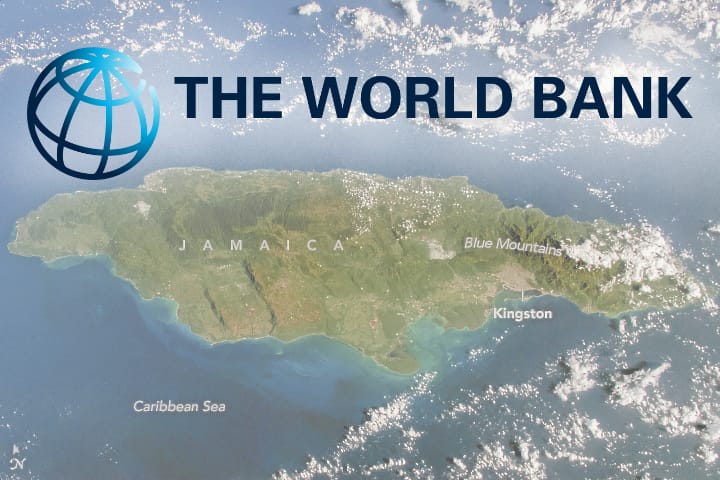
After the devastating impacts of hurricane Melissa triggered a full $150 million payout of its IBRD CAR Jamaica 2024 parametric catastrophe bond, the rapid funding from this insurance product helped the country recover its electricity network faster than would have otherwise been possible, the government’s Chief Fiscal Economist explained last week.
 Speaking at the ILS Bermuda Convergence 2026 conference on the island last week, Terron Francis, Chief Fiscal Economist in the Ministry of Finance & the Public Service, Government of Jamaica highlighted the critical role of risk transfer and insurance risk capital in helping the Caribbean island nation to recover after the impactful storm.
It was enlightening to hear how the proceeds of the catastrophe bond payout were put to immediate use, in helping to restore power to the affected western regions of Jamaica.
This is a story seldom told in reinsurance and insurance-linked securities markets, that the vital capital sources are both critical for recovery and also help to buffer government budgets from much worse financial effects, when natural catastrophes strike.
Francis explained that Jamaica’s forward-thinking use of risk transfer and insurance to create a multi-layered disaster risk financing structure had helped to prevent the negative economic effects of the major hurricane landfall being much worse than they could have been without the protection.
Jamaica’s multi-layered risk-transfer arrangements included parametric insurance cover from the Caribbean Catastrophe Risk Insurance Facility (CCRIF SPC) and the government’s second sponsorship of a catastrophe bond, facilitated by the World Bank.
These instruments worked as designed, responding to the impact of a high-severity, low-frequency return period catastrophe event.
Francis said that the parametric catastrophe bond payout arrived within 30 days, supporting response and recovery for Jamaica, without forcing the government into emergency borrowing or substantial programme-budget reallocations.
He presented Jamaica’s experience as evidence that well-structured and designed planned disaster risk financing can improve fiscal resilience and deliver social benefits, while reducing the fiscal economic burden that would have materialised without such risk transfer instruments being in place.
Francis explained, “The catastrophe bond paid out following Hurricane Melissa in 2025, yielding to the country $150 million US dollars.
“Now that is significant. It doesn’t close the gap, as it relates to the funding required for the response and recovery effort, but certainly it would have given the Jamaica government a significant boost in terms of its immediate response.
“In fact, the resources that we would have obtained from the triggering of these policies, the catastrophe bond, and those policies which we hold with the Caribbean Catastrophe Risk Insurance Facility, those would have enabled Jamaica to provide assistance to the single electricity electricity supplier in Jamaica, the Jamaica Public Service Company (JPS), to enable them to accelerate the repairs to the network, which was significantly damaged, enabling them to restore electricity to businesses as well as to households much earlier than they would have anticipated.
“So when the hurricane hit in October of 2025, the power right across the western side of the of the island went at the time. JPS assessed that it would take, because of the significance of the damage to the power network, it would not be before July of 2026 that power would have been restored.
“However, with the assistance provided by the government, we had 98% of the western side of the island actually receiving power back by February, March of 2026. So we see how the investment in the catastrophe bond assisted Jamaica in restoring some economic activity to the west, particularly the western part of Jamaica, because for the eastern and central parts of Jamaica, those were not significantly damaged, and so there was continuous electricity being provided to that section.”
He went on to highlight how this protects government budgets and reduced the need for immediate borrowing, which is the more typical route for disaster recovery financing when high-severity events occur.
“With the payment of the triggered amounts from the catastrophe bond, the government of Jamaica was able to undertake its response, undertake some amount of recovery, without having to undertake much reallocation of its programme budget.
“Not only that, we did not have to engage in emergency borrowing, which normally is what happens following the aftermath of a hurricane, we would have had to resort to significant adjustments in the budget. We would have had to run to find creditors to provide us loans. But in this instance, we didn’t need to do that. So there was fiscal stability that was ensured, but also there was debt stability,” Francis said.
He further noted that Jamaica’s debt to GDP ratio only increased by a few percentage points, from around 62.4% to 65.5% after the event, where as more typically this could have soared if immediate borrowing was required to fund the necessary recovery.
Francis stated, “Now that is unprecedented. Usually there is a big jump in the public debt to GDP ratio following a natural disaster. So these are some of the benefits that Jamaica experienced from having invested primarily in the catastrophe bond, which triggered a full payout following the passage of Hurricane Melissa.”
He added, “We know that parametric insurance provides you fast, reliable disbursements, and so our investment in the catastrophe bond cemented that for us. That this is the way to go, rather than doing indemnity where persons have to come and do an assessment to see what the losses are. We were able to benefit from the payouts within under 30 days of the event actually impacting Jamaica.
“I believe that Jamaica, having demonstrated the effectiveness of a strategic disaster risk financing plan, that other disaster-prone territories, small island developing states in particular, that we would have provided evidence that it pays to have such a disaster risk financing plan and strategy in place. And I believe that, from a regional perspective, that scaling this ILS framework will be vital to securing resilience, particularly for the Caribbean area.”
It is good for the industry and its investors to hear how its risk capital is put to use by users of insurance-linked securities technology. As we said, it’s a story that is seldom told. It’s also positive for other potential sovereign sponsors of cat bonds to hear from this experience and how the funding was utilised.
More typically, we think of or hear about an insurer or reinsurer funding its claims payout to policyholders when a catastrophe bond is triggered, given the reinsurance protection they often are providing.
But Jamaica’s experience shows how cat bonds and ILS can be a critical component of sovereign disaster risk financing, providing vital funding to aid the immediate response to a disaster while protecting the economic and fiscal situation to reduce pressure as the recovery continues.
 View all of our Artemis Live video interviews and subscribe to our podcast.
All of our Artemis Live insurance-linked securities (ILS), catastrophe bonds and reinsurance video content and video interviews can be accessed online.
Our Artemis Live podcast can be subscribed to using the typical podcast services providers, including Apple, Google, Spotify and more.