



As institutional investors constantly compare catastrophe risk with private credit, infrastructure, emerging market debt, as well as other alternatives, the fact that many continue to consistently maintain their insurance-linked securities (ILS) allocations heavily shows where they see value today, Klaus Sapelza, Chief Underwriting Officer at Lumen Re told Artemis.
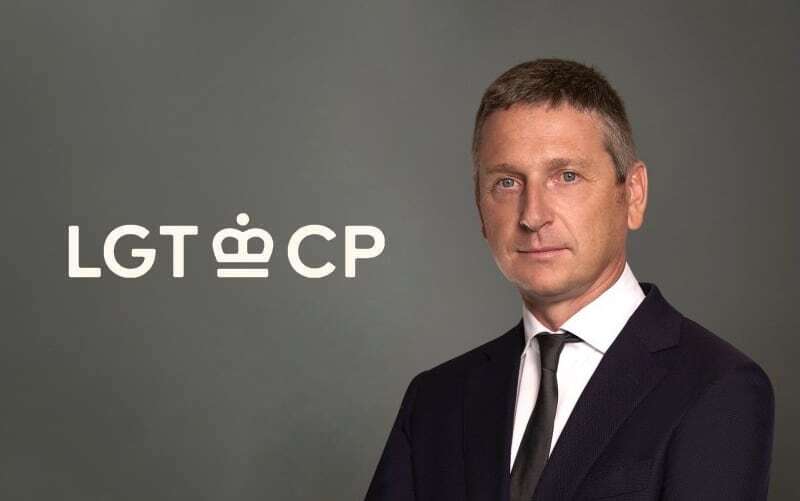 Lumen Re is the main Bermuda-domiciled rated reinsurance underwriting vehicle of specialist insurance-linked securities manager LGT ILS Partners.
Sapelza spoke to Artemis around the key conference season and discussed a number of key topics, such as the crucial role ILS managers play towards helping investors make allocation decisions during market cycles, as well as how he views the ILS market’s continued expansion into casualty and cyber lines.
A common view across the market is that ILS capital drives the reinsurance cycle by flooding in after good years and undermining pricing discipline. However, Sapelza sees it differently.
“Capital allocation decisions are not made by ILS managers. They are made by pension funds, sovereign wealth funds, endowments, family offices and other institutions. These investors compare ILS with other alternative asset classes. If expected ILS returns become less attractive than those of other alternatives, capital will move elsewhere, although not necessarily overnight,” the CUO explained.
The CUO continued: “The concept that institutional investors are unaware of where the reinsurance market sits in the cycle has never felt particularly convincing to us. Most of the investors we speak with focus on relative value. In some respects, we would even argue that ILS capital can be quite disciplined. It is not tied to market share, client relationships or strategic ambitions. When returns no longer justify the assumed risk, capital can leave.”
“The reinsurance cycle matters. But so does the broader investment cycle. Investors are constantly comparing catastrophe risk with private credit, infrastructure, emerging market debt and other alternatives. The fact that many continue to maintain their ILS allocations indicates where they see value today.”
Moreover, the overall market consensus is that reinsurance pricing will further soften by 2027, which according to Sapelza, should not concern ILS investors.
“Investors are less concerned with whether pricing will be lower in 2027 compared to 2026 than with whether returns remain competitive with other allocation opportunities. Currently, we are not hearing that the alternatives are obviously more attractive. Private credit spreads have tightened. High-yield markets are relatively expensive by historical standards. Emerging market debt comes with a different set of risks.
“Against this backdrop, catastrophe reinsurance still offers short duration and relatively low correlation with broader financial markets. One factor that receives less attention is retained earnings. Even without fresh inflows, successful underwriting years generate additional deployable capital because earnings are typically reinvested. It is one reason why softening cycles can develop faster than people expect,” Sapelza told Artemis.
We then asked the CUO to explain that if investors make allocation decisions, what role does an ILS manager effectively play towards helping them navigate the market cycle?
Sapelza noted that investors expect ILS managers to source business, underwrite risk and provide them with market insights, which would include identifying less attractive opportunities, but stressed that much like any asset management business, there must be a balance between growing assets and maintaining discipline.
“We firmly believe that manager credibility matters more than asset growth. When conditions soften, managers can either assume more risk to defend returns or remain selective and accept that returns may moderate. Investors want appropriate compensation for risk. They should take a close look at a manager when gathering and retaining assets becomes a higher priority than protecting returns,” Sapelza said.
Reinsurance sidecars and retrocession quota shares have gained heavy momentum across the market throughout the last year. However, we asked Sapelza to explain whether he believes this portrays a healthy development for the market whilst it’s in the midst of a softening cycle?
“Sidecars have an important place in the market. Historically, they have allowed reinsurers to bring in additional capital when capacity was scarce, while retaining meaningful net exposure alongside investors whose interests are aligned,” the CUO said.
“Today, investors need to understand whether the sponsoring reinsurer is increasing third-party capital while maintaining its own commitment, or whether the reinsurer is reducing net exposure by transferring risk the company no longer wants in a softer market, while collecting a fee to subsidize the remaining net book. Those are very different situations. More broadly, sidecars increase available capacity.
“When the market is already well capitalized, this additional supply of course contributes to pricing pressure. That does not mean sidecars are inherently problematic. The question is whether the incentives and economics remain aligned between investors and the sponsoring reinsurer.”
Throughout the last few years, the insurance-linked securities market has expanded into casualty, cyber, and other long-tail lines to deploy the growing asset pool.
Cyber has been a key expansion area, with the ILS market seeing its first 144A cyber catastrophe bond transaction in late 2023, and since then the market has seen a total of 14 cyber-related cat bonds.
Additionally, the casualty ILS space has gained considerable momentum in recent years, as institutional investors continue to display heightened interest in longer-duration yield opportunities, which has helped drive a surge in casualty-oriented structures.
Whilst this shift in direction is bringing more momentum to the broader ILS space, Sapelza argues that these strategies are moving the asset class away from what originally attracted capital.
“The original attraction of ILS was fairly simple. Investors supported the insurance industry in managing extreme scenarios and gained access to short-tail catastrophe risk with a relatively clear loss trigger, limited duration, attractive returns and diversification benefits. However, casualty, cyber and other long-tail risks are very different from that initial proposition,” Sapelza said.
He continued: “Specifically regarding casualty, a block of long-tail business is often passed to asset managers who aggressively work the collateral pool to compensate for potential reserve deterioration. This may be a legitimate investment strategy, but it is simply structured finance, not ILS. Some of these novel strategies may prove successful, and some investors may genuinely want this diversification.
“However, these strategies move the asset class away from what originally attracted capital. Investors should ask themselves whether these strategies are developed because they solve a real problem and offer true value to investors, or if they are developed simply because managers need to allocate a growing pool of capital. Those two things do not always coincide.”
To end, Sapelza shared that Lumen Re remains focused on maintaining broadly consistent risk levels over time and accepting that returns may moderate during the cycle.
“When pricing softens, there is a temptation to move down the risk curve or take on more exposure to defend returns. We focus on maintaining broadly consistent risk levels over time and accept that returns may moderate during the cycle. If the market offers lower returns at a given level of risk, investors should earn less rather than be exposed to risks they did not originally sign up for.
“We spend a lot of time helping investors assess ILS against the other opportunities in the alternatives market. The allocation decision is theirs, but it should be made with a clear understanding of relative value. Having exclusive access to a rated carrier gives LGT ILS Partners flexibility. It allows LGT ILS Partners to access parts of the market that are difficult to reach through a fully collateralized structure and to be selective about where the firm deploys capital. The focus is on underwriting quality and allocating capital where the risk-reward balance still makes sense,” Sapelza concludes.
Read all of our interviews with ILS market and reinsurance sector professionals here.
 View all of our Artemis Live video interviews and subscribe to our podcast.
All of our Artemis Live insurance-linked securities (ILS), catastrophe bonds and reinsurance video content and video interviews can be accessed online.
Our Artemis Live podcast can be subscribed to using the typical podcast services providers, including Apple, Google, Spotify and more.